

Online Quran Classes for Kids: A Complete Parent's Guide
At some point, almost every Muslim parent living outside a Muslim majority country ends up asking the same question. How do I actually get my child solid Quran education without a proper Islamic school nearby, without driving forty minutes to the nearest mosque three times a week, and without turning it into a constant battle at home?
For a lot of families, online Quran classes for kids have become the answer. Not because it's the trendy option, but because it genuinely solves a real logistical problem while still giving children access to qualified, serious instruction. That said, not every online program is built the same way, and choosing the wrong one can leave a child bored, behind, or worse, disconnected from something that's supposed to feel meaningful rather than like a chore.
This guide walks through everything worth knowing before you sign your child up. What good online Quran classes actually look like, how to tell a serious academy from one that's cutting corners, what to expect week to week, and how to keep your child motivated once the initial excitement of a new class wears off.
Why Online Quran Classes for Kids Have Become So Popular?

A decade ago, the idea of learning Quran over a video call would have sounded strange to a lot of families. Now it's one of the most common ways Muslim children around the world learn to read, memorize, and understand the Quran, especially in places where local options are limited.
Part of this shift is simply access. If you live in a smaller town in the US, a rural area in the UK, or really anywhere without a large established Muslim community, finding a qualified Quran teacher nearby, let alone one trained specifically to teach children, can be genuinely difficult. Online classes remove that barrier completely. Your child can be taught by a properly trained instructor in Egypt or Saudi Arabia while sitting in your living room in Chicago or Manchester.
There's also the pandemic effect that never fully reversed. A lot of families discovered during that period that online learning, done properly, actually works quite well for young children, sometimes better than expected. Once that trust was built, many families simply stuck with it even after in person options became available again.
And then there's the flexibility piece, which honestly might be the biggest factor for busy households. Between school, extracurriculars, and everything else on a modern family's plate, finding time for a fixed weekly commute to a physical class is hard. Online classes fit into the cracks of a schedule in a way physical ones often can't.
Make Quran Learning Easy and Engaging for Kids
Give your child a positive and rewarding Quran learning experience with Online Quran Classes for Kids at Nour Ul Quran Academy. Our experienced teachers provide personalized lessons that are designed around each child's age, level, and learning needs.
Children can learn Quran reading, recitation, memorization, and essential Islamic teachings from the comfort of home. Flexible online classes make it easier for parents to create a consistent learning routine. Enroll your child today and help them build a lifelong connection with the Quran through Nour Ul Quran Academy.

What Good Online Quran Classes for Kids Actually Include?
Not all programs are created equal, and it's worth knowing exactly what separates a strong Quran education program from one that's essentially just a video call with some Quran recitation happening in the background.
Qualified, Al Azhar Trained Teachers
This is probably the single most important factor. Al Azhar University in Cairo has been one of the most respected centers of Islamic scholarship for over a thousand years, and teachers trained there generally bring a depth of knowledge in Tajweed, Arabic grammar, and Quranic sciences that's hard to match elsewhere.
When you're evaluating a program, don't just take "experienced teacher" at face value. Ask specifically about certifications, Ijazah in Quran recitation if applicable, and formal training background. A tutor with proper Ijazah has been personally certified by a qualified scholar as having mastered correct recitation, which is a meaningful credential, not just a resume line.
Proper Tajweed Instruction From the Start
Tajweed refers to the set of rules governing how the Quran should be correctly pronounced, including where to pause, how to elongate certain letters, and how to properly articulate sounds that don't exist in most other languages. Skipping proper Tajweed instruction early on tends to create bad habits that are much harder to correct later, once a child has already memorized something incorrectly dozens of times.
Good programs build Tajweed into lessons from the very beginning, even for young beginners, rather than treating it as an advanced topic to be added later.
A Clear, Structured Path
Ask any academy you're considering to walk you through their actual curriculum. A serious program should be able to describe, clearly, the typical journey a child takes: starting with Noorani Qaida for correct letter pronunciation and basic reading rules, moving into Quran reading with Tajweed application, and eventually progressing into memorization (Hifz) for families interested in that path.
If the answer to "what does my child actually learn over the next six months" is vague, that's usually a sign the lessons are being improvised session to session rather than following any real structure.
One on One Live Sessions
Group classes can work for older kids in some cases, but for younger children especially, one on one instruction makes an enormous difference. A tutor working individually with your child can immediately notice if a specific letter or rule isn't landing, and adjust right there, instead of moving forward because the rest of a group is ready.
This matters even more with recitation, since correcting pronunciation requires the tutor to actually hear your child clearly and respond in real time, something that gets much harder in a group setting with multiple kids talking over each other.
Regular, Honest Progress Updates
You shouldn't have to guess how your child is doing. Good academies send parents regular reports, ideally weekly, covering what was covered, how well the child is retaining it, and where extra practice at home would help. This keeps you genuinely involved without requiring you to sit through every session yourself.
How Online Quran Memorization Actually Works for Kids?
Hifz, the process of memorizing the Quran, is often the part parents feel most uncertain about when it comes to online learning. It's a reasonable concern. Memorization is intensive, and it's fair to wonder whether a screen can really replace the traditional, in person mentorship model.
In practice, a well run online Hifz program follows a similar rhythm to in person memorization, just adapted for video. A typical session usually includes Sabaq, the new portion being memorized that day, Sabqi, recent review of what was learned in the past few days or weeks, and Manzil, older review of previously memorized sections to keep them fresh long term. This three part structure is actually the traditional method used in memorization programs worldwide, online or not.
What online classes add is flexibility around pacing. A tutor working one on one can adjust how much new material to introduce based on how quickly a specific child is retaining things, rather than following a fixed group pace that might be too fast or too slow for an individual learner.
It's also worth setting realistic expectations here. Memorizing the Quran, even a portion of it, takes real time and consistency. Children who progress well typically do so through steady, manageable daily amounts rather than occasional long sessions. A good tutor will guide pacing so your child isn't overwhelmed, since burnout is a much bigger risk to long term memorization than moving slightly slower than some ambitious timeline.
What to Expect in Your Child's First Few Weeks?

If this is your first time enrolling a child in online Quran classes, knowing roughly what the early weeks look like can make the whole thing feel a lot less uncertain.
The first session or two usually focuses on assessment rather than diving straight into new material. A good tutor spends this time figuring out where your child currently stands: do they already recognize Arabic letters, have they had any prior Quran education, are they naturally comfortable speaking up or more reserved on camera.
From there, most programs settle into a predictable weekly rhythm. A short review of the previous session, introduction of new material in manageable chunks, guided practice with real time correction, and often a light, encouraging wrap up to end on a positive note. For younger kids especially, good tutors build in small breaks or lighter moments, since attention spans at that age genuinely have limits, no matter how engaging the teacher is.
Homework in the early weeks is usually light, often just five to ten minutes of daily review or practice. This is intentional. Piling on heavy homework for a five or six year old tends to create resistance rather than progress.
By around the one month mark, most parents start noticing small, concrete signs of progress. Maybe your child starts recognizing certain Arabic letters when they see them elsewhere. Maybe they start humming or repeating a verse from their lesson without being asked. These small, unprompted moments are usually a better sign of real progress than any formal check in.
Questions to Ask Before Choosing a Program
A short conversation with any academy you're considering can reveal a lot before you commit financially. Here are the questions worth asking directly.
What is the teacher's actual qualification, specifically? Push past "experienced" and ask about Ijazah, Al Azhar training, or other formal certification. This is one of the clearest indicators of teaching quality for Quran and Tajweed specifically.
Can we request a different tutor if the fit isn't right? Personality and teaching style matter enormously with young kids. A program that makes switching tutors easy shows they prioritize your child's comfort over just filling a schedule slot.
What is the makeup class policy? Kids get sick, families travel, life happens. Ask clearly what happens when a session is missed, on either side, and make sure the policy feels fair.
Is a trial class available? This is genuinely one of the most useful steps before committing to a monthly plan. A short trial session lets you and your child experience the actual teaching style and platform firsthand, with no pressure attached.
How is progress tracked and shared with parents? Look for specifics, weekly reports, clear notes on what was covered, rather than vague reassurances that "we'll let you know if there's an issue."
Common Challenges and How Parents Handle Them

No learning journey is perfectly smooth, and knowing the common bumps ahead of time makes them a lot less frustrating when they show up.
Trouble focusing during class. This is probably the most common concern parents raise. A few things help consistently: keeping the learning space quiet and free of distractions, sitting nearby for the first few sessions until your child settles into the new routine, and scheduling classes at a time of day when your child isn't already worn out from school.
Feeling like progress is slow. Quran learning, and memorization especially, isn't linear. There will be stretches that feel slow, followed by sudden jumps where several verses suddenly click into place at once. This pattern is completely normal and isn't a sign something is wrong with the approach.
Initial resistance from the child. Especially with younger kids, some pushback in the first week or two is fairly typical. This usually eases once a real relationship forms with the tutor and the child starts experiencing small wins, like correctly reciting a verse without help for the first time.
Technical issues. Spotty internet, camera glitches, a child accidentally muting themselves mid session. These things happen. A responsive support team that can help troubleshoot quickly, rather than leaving you to figure it out alone, makes a real difference here.
Practical Ways to Keep Kids Engaged and Motivated
A handful of small habits at home can noticeably improve how much a child actually retains and enjoys their lessons.
Celebrate specific wins out loud, not just generic praise. When your child recites a verse correctly for the first time or masters a tricky Tajweed rule, point out exactly what they did well. Specific praise tends to land much better with kids than a general "good job."
Keep the schedule consistent. Same days, same general time whenever possible. Predictability genuinely helps young children settle into a routine faster than classes that shift around constantly.
Review together occasionally, even briefly. You don't need to know Quran recitation yourself to sit with your child for five minutes while they review what they learned. Just showing interest reinforces that this matters at home, not only during the scheduled class.
Avoid turning review time into pressure or punishment. If a session doesn't go well, or your child forgets something they'd previously learned, treat it as a normal part of the process rather than a setback worth getting upset about. Kids pick up on parental frustration quickly, and it tends to create more resistance, not less.
Why Families Choose Nour-ul Quran Academy for Their Children?
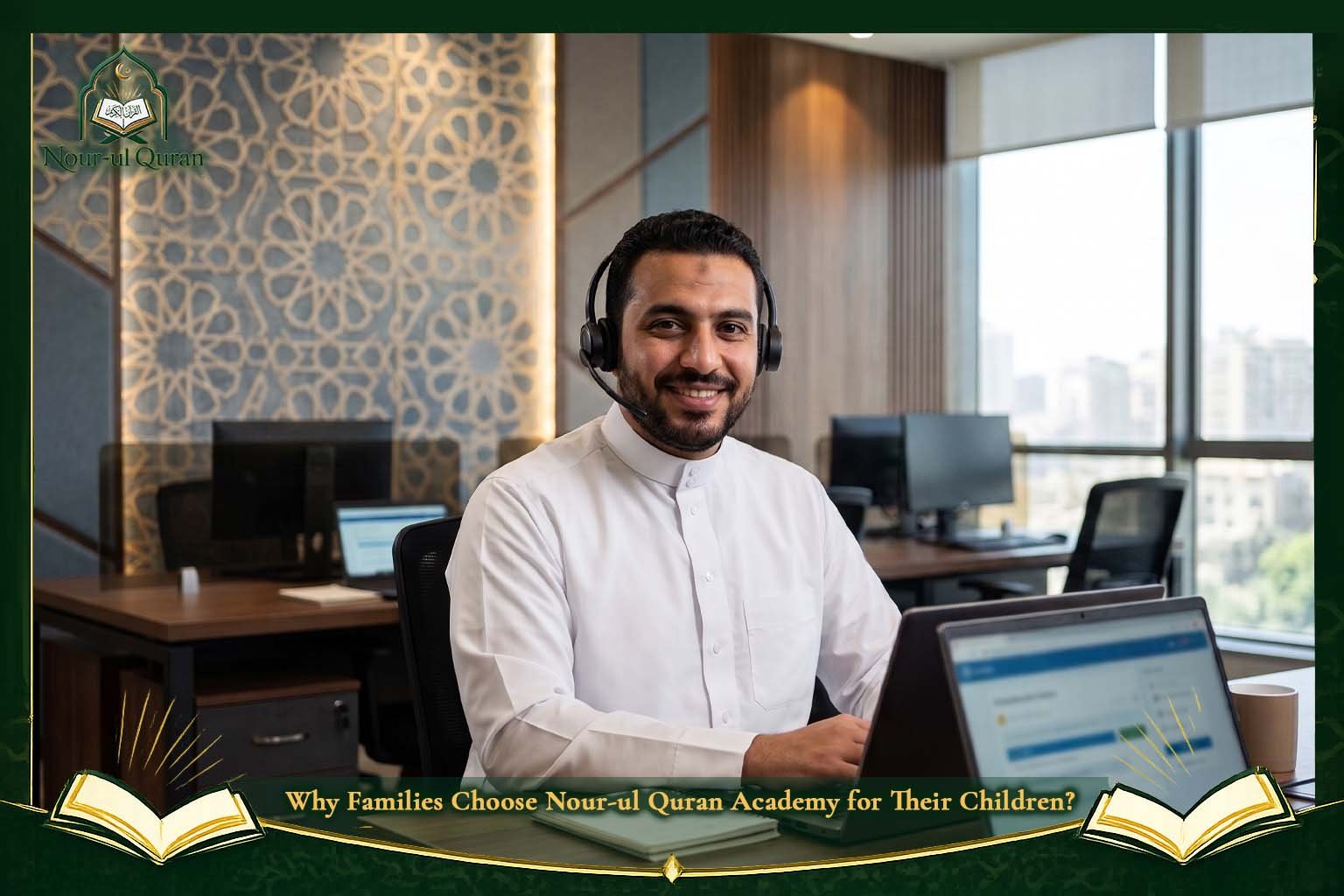
At Nour-ul Quran Academy, our Quran program for kids is built directly around the concerns most parents raise before they even sign up. Our teachers are Al Azhar trained and based in Egypt, with specific experience teaching children living abroad in the USA, UK, Canada, Europe, and Australia, so they understand the particular challenges of learning Quran outside a traditional Islamic environment.
Every class is live and one on one over Zoom, meaning your child gets the tutor's full attention in every single session, with pacing adjusted specifically to how they're progressing. Classes run seven days a week across all time zones, which means you're not stuck trying to force a rigid slot into an already packed family schedule.
We send weekly progress reports so you always know exactly what's being covered and how your child is doing, and if a tutor isn't quite the right fit personality wise, our team makes switching straightforward, without any awkward process attached.
Whether your child is just starting to learn the Arabic alphabet, working through Noorani Qaida, or already progressing through Hifz memorization, our courses are structured to grow with them at a pace that actually fits their individual learning, rather than a fixed group timeline.
Frequently Asked Questions
At what age can a child start online Quran classes? Most academies, including ours, welcome children from around age four, with lesson pacing and content adjusted to suit attention span and comprehension at that age.
Do children need to already know Arabic before starting? No. Most children beginning online Quran classes have no prior Arabic knowledge, and a proper curriculum starts from the very basics, including letter recognition, before moving into reading and recitation.
How many classes per week are recommended? Two to three sessions weekly tends to strike a good balance between steady, sustainable progress and not overwhelming a young learner, though this can be adjusted depending on family schedule and goals.
Can online classes really lead to full Quran memorization? Yes. Many students complete significant portions or the entire Quran through consistent online Hifz programs, following the same Sabaq, Sabqi, and Manzil structure used in traditional in person memorization.
What happens if my child falls behind or needs to slow down? A good tutor adjusts pacing based on the individual child rather than pushing a fixed schedule. Falling behind a projected timeline isn't unusual, and a quality program will simply recalibrate rather than treating it as a problem.
Final Thoughts
Online Quran classes for kids have become a genuinely reliable way for families around the world to give their children a proper Quran education, regardless of where they live or how close the nearest mosque happens to be. The key is being selective rather than picking the first academy that shows up in a search.
Ask real questions about teacher qualifications, try a trial class before committing to anything monthly, and pay close attention to how your child responds to their tutor rather than judging purely on how polished a website looks. Progress in Quran learning takes patience and consistency, but with the right structure and the right teacher, it happens more steadily and meaningfully than most parents expect going in.
If you'd like to see this in action, Nour-ul Quran Academy offers a trial class so your child can experience a live session firsthand before you commit to anything. Sometimes trying it out is simply the easiest way to know it's the right fit.