
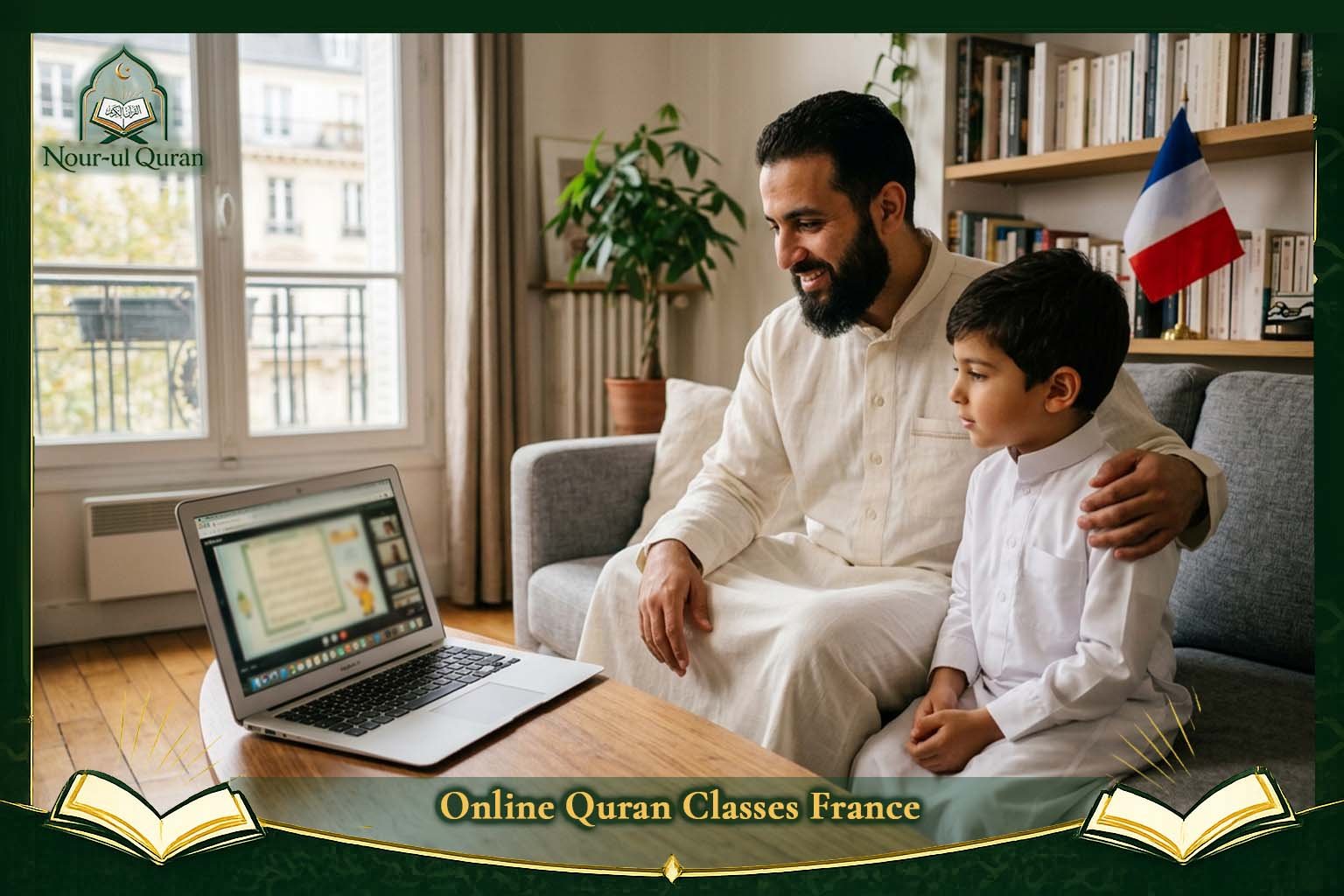
Finding a genuinely good Quran teacher for your child in France isn't always as simple as it sounds, even in a country with one of the largest Muslim populations in Western Europe. Cities like Paris and Marseille have community options. Plenty of other towns don't, or the options that exist are stretched thin.
This is exactly why online Quran classes France wide have become such a practical solution for a growing number of families. Instead of depending entirely on what happens to exist nearby, families anywhere in the country can now reach properly trained, experienced Quran teachers.
This guide walks through why this approach works well for French families specifically, how scheduling and the time difference actually play out, what genuinely matters when choosing a program, and how to get started with confidence.
Why Access to Quran Education Varies So Much Across France?
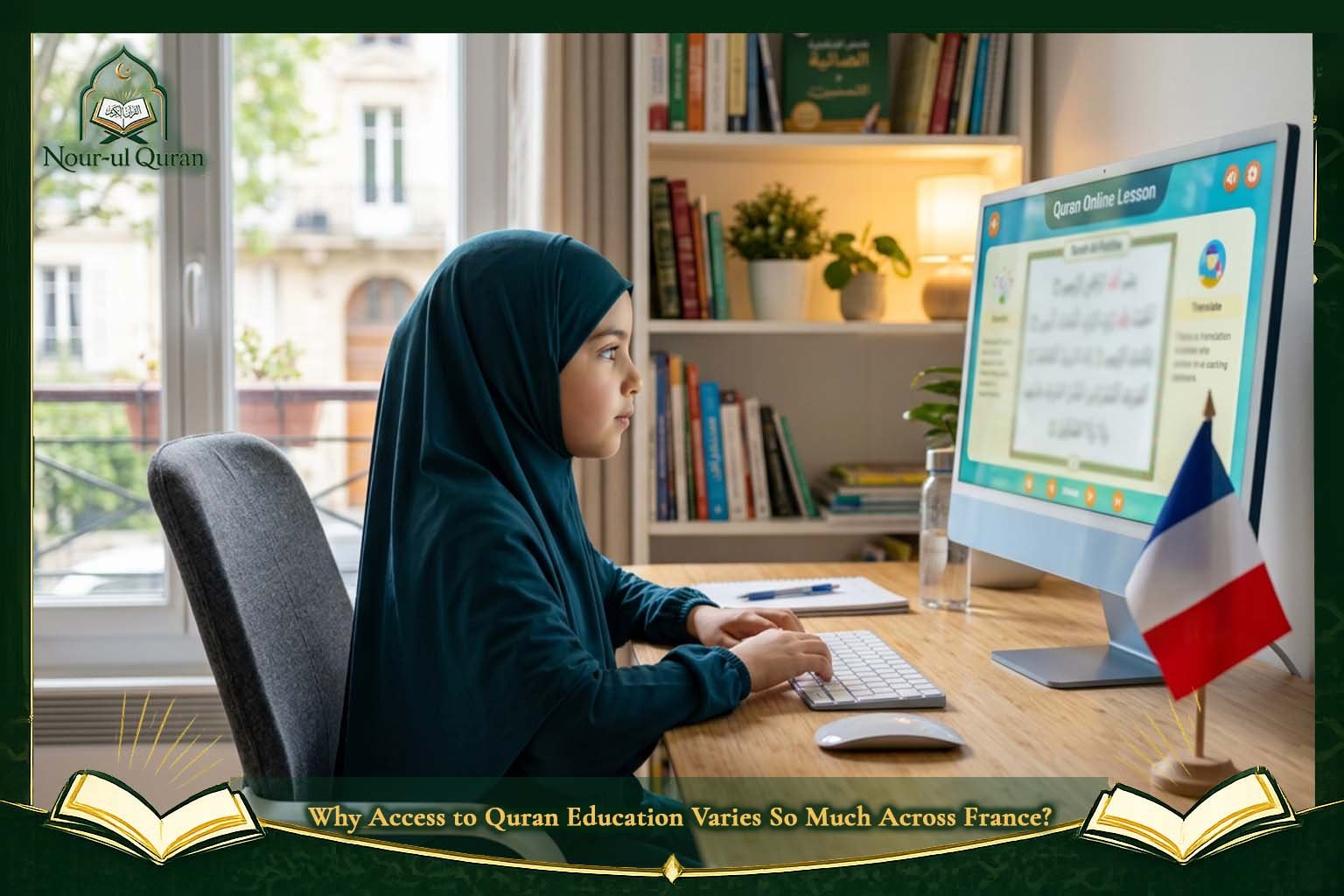
France's Muslim population is genuinely large, now estimated in the millions nationally. But a large population overall doesn't mean every family has equal access to structured children's Quran education. Paris and Marseille tend to have more mosques and community centres running dedicated programs. Smaller towns, and even parts of the suburbs around major cities, often have far fewer structured options, sometimes limited to informal arrangements rather than anything properly organized.
There's also a specific French context worth understanding here. Under the country's principle of laïcité, religious instruction doesn't happen through the public school system. This means Quran and Islamic education for children depends entirely on what a family arranges outside of school hours, with no institutional backup to lean on if local community options fall short.
For a lot of parents, this makes the reliability and structure of whatever program they choose even more important. Online Quran classes France families increasingly turn to solve this exact gap, since geography stops being a limiting factor entirely once learning moves online.
The Practical Reasons Families Choose Online Classes
A handful of specific reasons come up again and again when French Muslim parents explain their decision.
Local programs often mean large groups with limited individual attention. Where community based Quran classes do exist in France, they're frequently run by volunteers managing a full room of children across different ages and levels. This naturally limits how much correction any single child receives in a given session. One on one online sessions solve this directly.
A busy French school week leaves little room for extra travel. French school days already run long, often finishing well into the late afternoon, sometimes with a half day Wednesday that gets absorbed by other activities. Adding a physical commute to and from a Quran class on top of that is genuinely difficult for a lot of households.
Wanting a program that understands children raised primarily in French. A child growing up in France, especially one whose home language is a mix of French and something else, often has more limited daily Arabic exposure than a lot of parents assume. A good online program, particularly one staffed by tutors experienced with students living abroad, accounts for this directly rather than assuming a level of background familiarity the child may not actually have.
Consistency that survives a demanding school calendar. Between zone based holidays, occasional strikes affecting transport, and a school year that's genuinely packed, a physical weekly commitment is easy to lose momentum on. Online sessions, without the travel component, tend to hold up better over a full school year.
How Scheduling Works Given the Time Difference?
This is usually one of the first practical questions French parents ask, and it deserves a direct answer. France sits roughly one hour ahead of Egypt for most of the year, a small enough gap that it rarely causes real difficulty.
Most established academies, including programs built specifically for international students, run teaching hours across a wide window to accommodate families across Europe. In practice, this means a French family can usually find a comfortable slot in the late afternoon or early evening, right after school finishes for the day.
It's still worth confirming directly with any academy exactly how many time slots they offer across a full day, rather than just one or two fixed options, and how easily a schedule can shift if your family's routine changes.
A Note on the French School Calendar Specifically
This matters more in France than in a lot of other countries, since the school year is divided into three holiday zones, A, B, and C, with winter and spring break dates staggered depending on which zone your académie falls into. A program unfamiliar with this system might assume a single national holiday calendar, which can create unnecessary scheduling friction. If you want to check your own zone's specific dates before planning around them, the official French Ministry of Education school calendar lays this out clearly and is worth bookmarking for the school year ahead.
Choosing Online Quran Classes in France: What Actually Matters
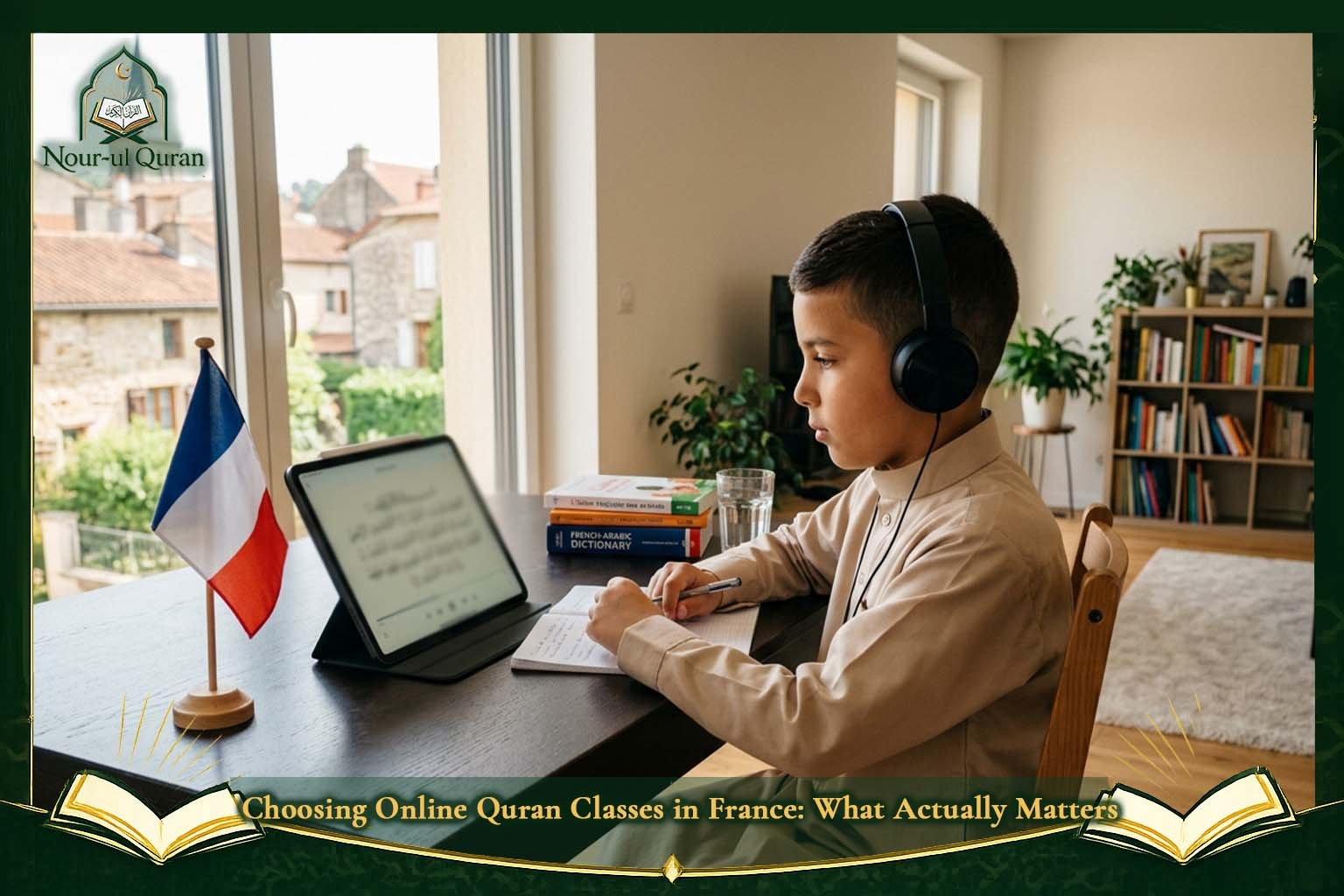
Beyond the general qualities worth checking in any Quran program, a few things deserve particular attention for families based in France specifically.
Teachers Experienced With Children Raised Outside Arabic Speaking Countries
There's a real difference between a teacher used to working with students fully immersed in Arabic daily life, and one experienced with children growing up mostly in French, with limited Arabic exposure at home. This experience genuinely shapes how effectively a tutor explains concepts, paces lessons, and holds a young student's attention throughout a session.
A Curriculum That's Actually Structured, Not Improvised
Ask directly what your child will cover over the coming months. A serious program can describe this clearly, session by session or stage by stage. A vague answer, something like "we'll just see how it goes," usually signals that lessons are improvised rather than building toward something specific. Our guide on how to choose an online Quran academy walks through the exact questions worth asking any program before committing.
Genuine Flexibility Around the French School Calendar
Given the zone based holiday system described above, plus the generally demanding pace of the French academic year, a program with easy, low friction rescheduling saves a lot of frustration compared with a rigid, hard to shift booking system.
An Honest Comparison With Local Options
If you already have some access to a local mosque or association running Quran classes, it's worth weighing that against an online option rather than assuming one is automatically better than the other. Our piece comparing online Quran academy vs local mosque lays this out honestly, covering where each tends to work better depending on your specific family circumstances.
What a Comprehensive Program Typically Includes?
A well rounded program usually covers several connected areas, rather than treating Quran study as one isolated subject disconnected from everything else.
For children starting completely from scratch, with no prior Arabic reading ability at all, online Quran classes for beginners builds letter recognition and basic reading skills methodically from the ground up. For kids who already read to some extent but have never received formal pronunciation correction, online Tajweed classes focus specifically on identifying and fixing those habits before they become harder to unlearn.
Families pursuing memorization as a longer term goal can follow the traditional, structured approach covered in our guide to online Quran memorization classes, which walks through realistic timelines and the review method used in proper Hifz programs.
Since many children growing up in France have genuinely limited daily Arabic exposure, a lot of families also add online Arabic classes for kids, which makes both Quran reading and memorization considerably more meaningful and easier to retain over time.
And for the broader picture beyond reading and reciting, Islamic Studies for kids covers belief, worship, and character in a way that helps children understand the reasoning behind their faith, not just the mechanics of it. For parents wanting to build or refresh their own knowledge alongside their children, Islamic Studies for adults covers that path as well.
Many families choose to combine two or three of these subjects together, since they naturally reinforce each other and considerably simplify scheduling compared with juggling entirely separate programs across different providers and time slots.
Helping Children Build Confidence in Their Identity
Beyond the technical skills of reading, Tajweed, and memorization, there's a quieter but equally important part of this whole process worth mentioning directly. A lot of Muslim children in France are among relatively few Muslim kids in their class or neighbourhood, navigating a French speaking, largely secular daily environment alongside a home life and faith that follow a different rhythm.
A strong Quran and Islamic Studies foundation does more than build recitation skill. It genuinely helps a child build pride and confidence in their identity, understanding not just what they practice but why, which matters just as much as the technical learning itself. This is part of why a lot of families choose to pair Quran study with structured Islamic Studies rather than treating recitation as the only goal, since understanding the reasoning behind practice tends to produce a much deeper, more lasting connection than memorization or reading skill on their own. Children who understand why they're learning something, not just how to do it, tend to carry that knowledge with far more confidence into adolescence and beyond, especially when navigating a school and social environment where their faith isn't always the majority experience around them.
Common Concerns French Parents Raise
"Will my child actually stay focused during an online lesson?" This depends heavily on session length and structure. Good tutors working with young children keep sessions appropriately short, typically twenty to forty minutes depending on age, with variety built in throughout rather than one long, undifferentiated block.
"What if we need to reschedule because of a school holiday zone difference?" A properly run academy handles this without friction, adjusting around your specific zone's calendar rather than assuming a single national schedule applies to everyone.
"Is this actually as effective as an in person class?" For correction based learning like Tajweed and reading, largely yes, since accuracy depends on hearing clearly rather than physical presence. Our overview of the benefits of joining an online Quran academy and our roundup of best online Quran learning methods both cover this comparison in more depth.
"How do we know a tutor is actually qualified?" Ask specifically about Al Azhar training or formal Ijazah in Tajweed and recitation, rather than accepting a vague description of general experience.
"What happens if my child and the tutor just aren't a good match personality wise?" This happens occasionally, and it's worth asking upfront how easy it is to request a different tutor if the fit isn't right. A program that makes this simple, without a lot of back and forth or awkwardness, shows they genuinely prioritize your child's comfort over just filling a schedule slot. Personality fit matters enormously with young learners specifically, since a child who feels at ease with their tutor engages far more openly than one who feels rushed or judged.
Making It Realistic Around a Demanding French School Week
French school days tend to run long, and between homework, extracurricular activities, and everything else that fills a typical week, adding Quran study on top can genuinely feel like a lot to manage. In practice, shorter, more frequent sessions, two or three times a week rather than one long weekly session, tend to fit more naturally into an already full schedule.
This also tends to produce better learning outcomes than cramming everything into one longer block, since young children generally retain material better through frequent, brief repetition rather than occasional longer sessions. Our guide to online quran learning for busy families covers specific strategies for making this realistic rather than something that quietly falls off the calendar after a few weeks of good intentions.
What the First Month Typically Looks Like?
Starting something new always feels a bit uncertain, so it helps to know roughly what to expect. The first session or two usually focuses on assessment rather than diving straight into new material. A good tutor will ask your child to try reading a short passage if they have any prior exposure, or start from the very first letters if they don't, simply to understand where they're actually starting from rather than guessing.
From there, lessons typically settle into a steady rhythm. A short review of the previous session, new material introduced in small, manageable pieces, guided practice with real time correction, and a light, encouraging wrap up to end on a positive note. For younger children specifically, good tutors build in short breaks or lighter interactive moments, since attention spans at that age genuinely have limits regardless of how engaging the teacher is.
Homework in the early weeks is usually light, often just five to ten minutes of daily review rather than anything overwhelming. By around the four to six week mark, most parents start noticing small, concrete signs of progress, maybe a child recognizing letters somewhere unexpected, or repeating a phrase from their lesson without being asked. These small, unprompted moments tend to be a better sign of real progress than any formal check in.
A Quick Checklist Before You Commit
Confirm the tutor's actual qualifications directly. Ask specifically whether they've taught children raised outside Arabic speaking countries before. Check how many time slots are genuinely available relative to French hours, not just a vague promise of flexibility. Confirm the rescheduling policy given France's zone based school holiday system.
And take advantage of a trial class before committing to anything longer term, since watching how a specific tutor interacts with your child tells you far more than any amount of reading a website ever will.
None of these questions should feel intrusive to ask, and a program worth choosing will answer them directly and without hesitation, since transparency at this stage is usually a fair predictor of how the actual teaching relationship will go once you commit.
Frequently Asked Questions
Are online Quran classes a good fit for children raised mostly in French? Yes. Many children growing up in France build strong reading, memorization, and Islamic Studies foundations through online classes, especially when paired with small amounts of reinforcement at home.
How does the time difference with Egypt affect scheduling? The gap is small, usually around one hour, so most French families find a comfortable after school or evening slot without much difficulty.
What age should my child start online Quran classes? Most programs, including ours, welcome children from around age four or five, with lessons and pacing adjusted for that age group.
Can we combine Quran, Arabic, and Islamic Studies together in one program? Yes, and many families find this works particularly well, since the subjects reinforce each other naturally and simplify scheduling considerably compared to working with separate providers.
Does France's zone based school calendar cause problems with scheduling? Not with a program that's aware of it. It's worth confirming directly with any academy that they can accommodate your specific zone's holiday dates without hassle.
How Progress Should Actually Be Tracked?
One thing worth asking any academy directly, and something that separates a genuinely well run program from one that just fills a weekly time slot, is how progress gets communicated back to you as a parent. You shouldn't have to guess whether your child is actually improving or simply repeating similar content week after week without real movement forward.
A good program sends some form of regular update, ideally weekly, outlining what was covered in each session, how well the material is being retained, and where extra practice at home would help. This keeps you genuinely informed without requiring you to sit in on every single lesson yourself.
For families pursuing memorization specifically, this kind of tracking matters even more. Since Hifz depends heavily on consistent review of previously memorized material, not just steady new memorization, you want clear visibility into what's been covered, what's being reviewed regularly, and where any weak spots exist that need reinforcement before they turn into bigger gaps later on.
If a program can't clearly explain how they track and communicate this to parents, it's worth treating that as a meaningful gap, not a minor detail. Consistent, transparent reporting is one of the clearest signs that a program is being run with real structure behind it, rather than loosely improvised from one session to the next.
Adult Learners Shouldn't Be an Afterthought Either
While most of this guide focuses on children, it's worth mentioning that plenty of adults in France pursue the same kind of structured learning for themselves, whether they're reverts building a foundation from scratch, parents wanting to refresh knowledge before teaching their own kids, or simply adults who never had the chance to learn properly growing up.
The same underlying advantages apply here. A one on one tutor, flexible scheduling that fits around work rather than the other way around, and the ability to ask questions privately without the self consciousness that can come with a group class. Many academies, including ours, work with adult students alongside children, sometimes even scheduling family sessions so a parent and child can build this foundation together, learning side by side rather than treating it as something only the younger generation needs.
Try a Trial Class First
The clearest way to know whether online Quran classes France wide genuinely suit your family is simply to try a real session rather than deciding from a website alone. Nour-ul Quran Academy offers a trial class so you can see exactly how a lesson runs, at a time that fits your family's schedule, before committing to anything further.