
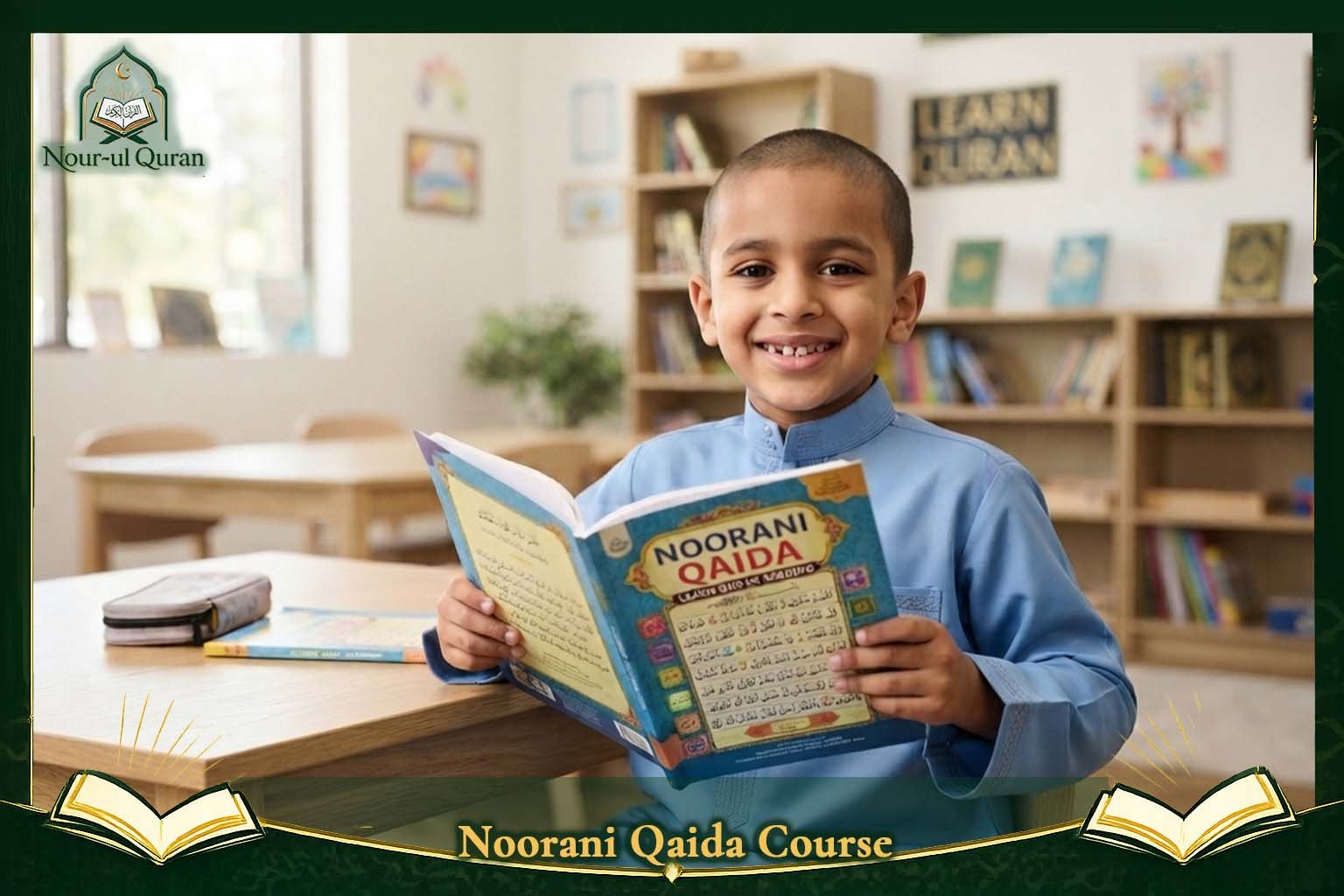
Noorani -qaida-course-enroll offers beginners a simple and structured way to learn the foundations of Quranic reading, pronunciation, and Arabic letters.
With nour ul quran Quran Academy, students can access guided lessons designed to build confidence step by step, whether they are children, teenagers, or adults.
The course focuses on recognizing letters, understanding their sounds, learning basic rules, and developing accurate pronunciation before progressing to Quran reading. Online learning also provides flexibility, allowing students to study from home according to their schedules.
Through qualified tutors, interactive lessons, and regular practice, learners can develop essential skills while receiving personalized guidance throughout their educational journey with confidence.
What Is Noorani Qaida?
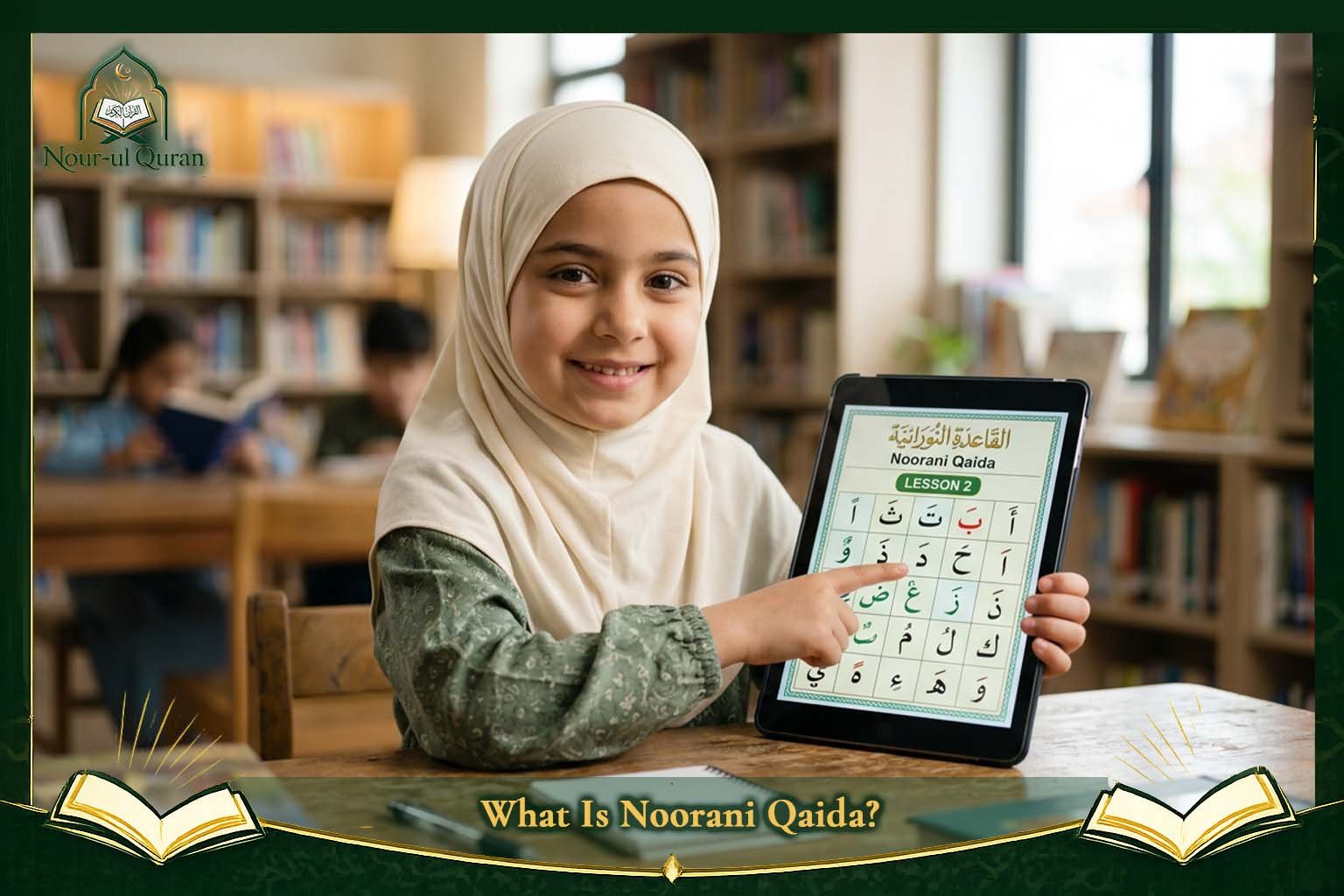
Noorani Qaida is the foundational primer used across the Muslim world to teach the correct pronunciation of Arabic letters before a student begins reading the Holy Quran.
It introduces the shapes and sounds of the Arabic alphabet, the rules of joining letters, harakat (vowel marks), tanween, sukoon, madd (elongation), and the basic rules of Tajweed in a simple, structured sequence.
Almost every accomplished Quran reciter, hafiz, or Islamic scholar started their journey with Noorani Qaida, because it builds the pronunciation habits (Makhraj and Sifaat) that make correct Quran recitation possible later on.
Start Reading the Quran Correctly with Noorani Qaida
Build a strong foundation in Quran reading with the Noorani Qaida Course at Nour Ul Quran Academy. This course is designed to help beginners learn Arabic letters, pronunciation, joining letters, and basic reading skills step by step.
With qualified teachers and personalized online lessons, students can learn at a comfortable pace from home. Whether the course is for you or your child, our structured approach makes learning easier and more engaging. Enroll in the Noorani Qaida Course today and take your first step toward confident and accurate Quran reading.
Who This Course Is For?
Our Online Noorani Qaida Classes are designed for complete beginners of any age who have little or no prior experience reading Arabic.
This includes young children starting their Islamic education for the first time, adult new Muslims (reverts) who want to learn to read the Quran from scratch, and any student who previously tried to read the Quran without a proper foundation and wants to correct their pronunciation. No prior knowledge of Arabic is required to join.
What Students Learn in This Course?
- Recognizing and correctly pronouncing all 29 Arabic letters, both in isolation and in their different joined forms
- Makhraj (the precise articulation point of each letter) and Sifaat (the characteristics of each letter's sound)
- Harakat (Fatha, Kasra, Damma) and how short vowels change pronunciation
- Tanween, Sukoon, and Shaddah rules
- Madd (natural and secondary elongation) rules
- Basic Tajweed rules needed before moving on to Quran recitation, including Noon Sakinah and Meem Sakinah rules
- Practical reading drills that gradually build up from single letters to full words and simple Quranic verses
Our Teaching Method
Every Noorani Qaida class is conducted one-on-one in a live online session with a qualified, Al-Azhar-certified tutor, using screen sharing so the student can see the Qaida text clearly while the tutor demonstrates correct pronunciation in real time.
Lessons move at the pace of the individual student rather than a fixed class schedule, since mastering each rule properly before moving to the next is more important than speed. Tutors correct pronunciation mistakes immediately, which is very difficult to do in a large group class or through recorded videos.
Why Learn Noorani Qaida With Nour ul Quran Academy?
Skipping Noorani Qaida or rushing through it is one of the most common reasons students struggle with Quran recitation later on. Our tutors take this stage seriously, dedicating full lessons to pronunciation accuracy rather than rushing students into Quran reading before they are ready.
Because our tutors are certified through Al-Azhar University with verified Ijazah in Quran recitation and Tajweed, students learn correct pronunciation from the very first lesson rather than picking up habits that need to be corrected later.
Classes are available at flexible times to suit students across different time zones, with both kids' and adult-friendly teaching styles.
What Happens After Noorani Qaida?
Once a student completes Noorani Qaida and demonstrates solid, correct pronunciation, they move naturally into our Quran Reading and Quran Memorization (Hifz) courses, applying everything they learned to real Quranic text with continued Tajweed correction from the same tutor wherever possible, for a smooth and consistent learning journey.
Get Started
Book a free trial class to have your child or yourself assessed by one of our certified tutors and start your Noorani Qaida journey on the right foundation.
The Stages of Learning Noorani Qaida
Our Noorani Qaida program is broken down into clear, progressive stages so that both students and parents can see exactly where they stand at any point in the course.
- Stage 1 — Letter Recognition: The student learns to recognize and name each of the 29 Arabic letters in their independent form before moving on to anything else.
- Stage 2 — Makhraj and Correct Pronunciation: The tutor works individually with the student on the exact articulation point of each letter, since many letters that look different in English transliteration (such as "س" and "ص", or "ح" and "ه") require very different mouth and throat positions in Arabic.
- Stage 3 — Joined Letters: Once single letters are solid, the student learns how letters change shape depending on their position at the beginning, middle, or end of a word, and how to read them fluently when joined together.
- Stage 4 — Harakat, Tanween and Sukoon: The student learns how short vowel marks and the absence of a vowel (sukoon) change the sound of a letter, building the foundation for reading real words.
- Stage 5 — Madd and Elongation Rules: The student learns the different lengths of elongation (2, 4, or 6 counts) and when each rule applies.
- Stage 6 — Noon Sakinah, Tanween and Meem Sakinah Rules: Basic Tajweed rules that govern how certain letter combinations are pronounced when reciting.
- Stage 7 — Reading Practice and Revision: The student applies everything learned to structured reading exercises and short Quranic phrases, with continuous revision of earlier lessons to make sure nothing is forgotten before graduating to full Quran reading.
Common Challenges Students Face — and How Our Tutors Help
Many students who learn Noorani Qaida from a book alone, a mobile app, or a large group class struggle with a few recurring problems: mixing up similar-looking letters, mispronouncing letters that do not exist in their native language, rushing through the rules without truly mastering them, and losing motivation because progress feels invisible.
In a one-on-one live class, our tutors catch these issues immediately rather than letting them turn into long-term habits.
If a student consistently struggles with a specific letter or rule, the tutor slows down, uses extra repetition and examples, and does not move forward until the student is genuinely comfortable — instead of following a fixed weekly curriculum regardless of the student's actual progress.
Noorani Qaida for Adults and New Muslims
While Noorani Qaida is traditionally associated with children, a large number of our students are adults, including new Muslims (reverts) who did not grow up reading Arabic.
We understand that adult learners often feel self-conscious about starting from the very beginning, especially if they are already confident and accomplished in other areas of life.
Our adult-focused Noorani Qaida classes are taught with patience and respect, at a pace that fits a busy adult schedule, and without the classroom-style pressure that can make some adults hesitant to enroll.
Many adult students tell us that mastering Noorani Qaida properly, even later in life, gives them a level of confidence in their prayer and Quran reading that they had been missing for years.
How We Track Progress?
Every student has a running record of which letters, rules, and pages of the Qaida they have mastered, reviewed by both the tutor and, for younger students, shared with parents after each session or on a weekly basis.
This means parents always know exactly where their child stands, rather than relying on vague updates like "doing well." For adult students, this same tracking is used to set realistic milestones and keep motivation high, since visible progress is one of the biggest factors in successfully completing the Qaida instead of abandoning it partway through.
Class Format, Duration, and Scheduling
Noorani Qaida classes are delivered one-on-one, live, over video call with screen sharing so the tutor and student can look at the same page at the same time. Typical sessions run 30 to 45 minutes, two to five times per week depending on the student's goals and availability, though schedules are fully flexible and can be adjusted at any time.
Because classes are one-on-one rather than in a fixed group, there is no need to wait for a new "term" to start — a new student can begin their first lesson within days of signing up, at a time that suits their own time zone.
Tips for Parents Supporting a Child Through Noorani Qaida
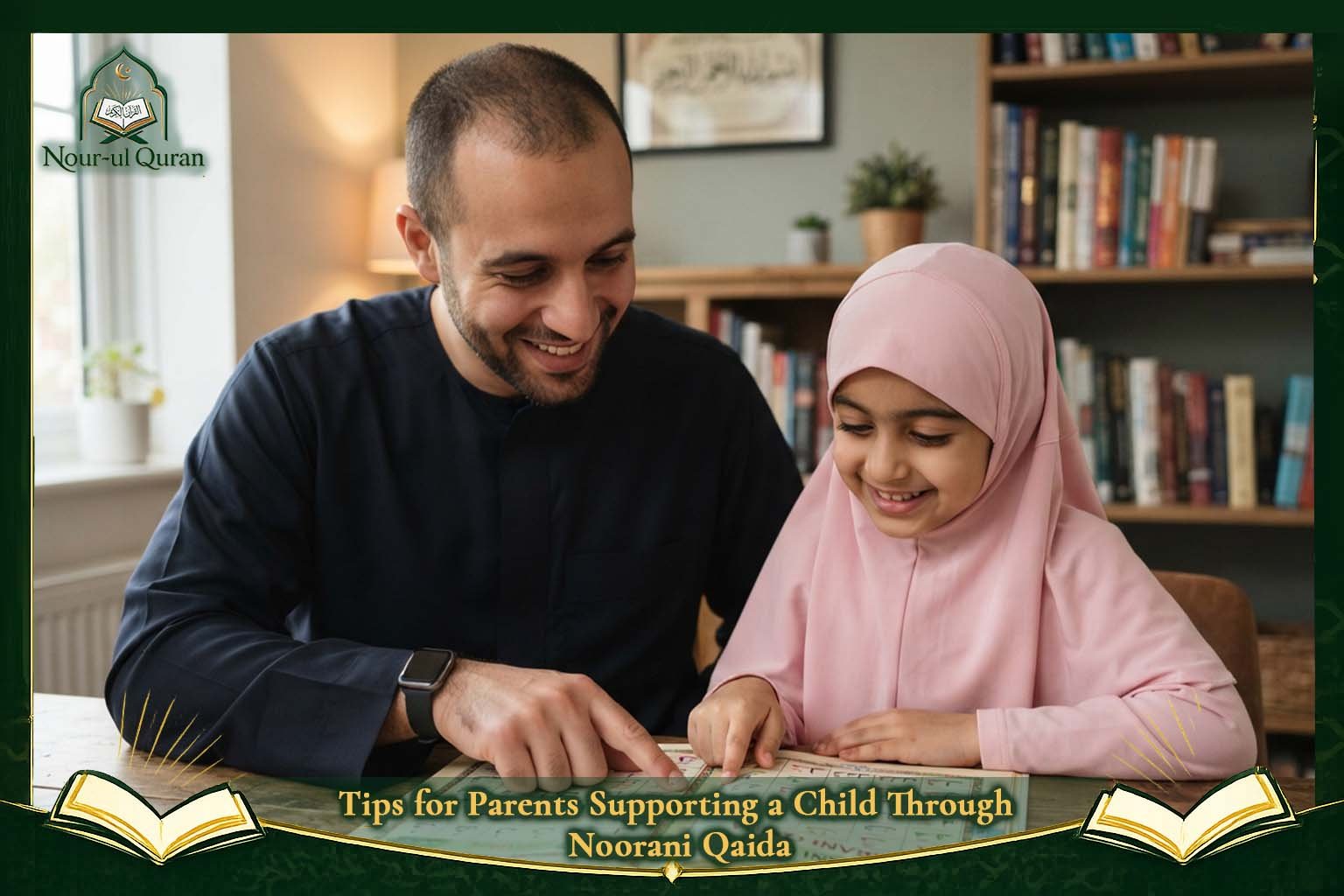
Parents play an important role in how quickly and confidently a child progresses through Noorani Qaida. A few short minutes of daily practice between lessons, in a calm and encouraging environment, makes a noticeable difference compared to relying on class time alone.
We recommend parents sit in on at least the first few sessions to understand how the tutor is teaching pronunciation, so that any home practice reinforces the same habits rather than contradicting them.
Celebrating small milestones, such as finishing a new letter group or reading a short word correctly for the first time, helps keep young learners motivated through what can otherwise feel like a long and repetitive process.
Frequently Asked Questions
Find clear answers to common questions about enrolling in a Noorani Qaida course, including lessons, tutors, schedules, fees, and learning requirements.
How long does it take to finish Noorani Qaida?
Most students complete the course in two to six months, depending on their age, how many classes they take per week, and how much they practice between sessions.
Do I need to know any Arabic before starting?
No. Noorani Qaida is specifically designed for complete beginners, and our tutors assume no prior knowledge of Arabic letters or reading at all.
Can my child switch to a female tutor?
Yes. We offer both male and female certified tutors, and you can request a preference when you book your free trial class.
What happens after I finish Noorani Qaida?
Students move directly into Quran reading and, if they choose, our Quran Memorization (Hifz) course, continuing with correct Tajweed application from day one.
Is there a free trial before I commit?
Yes, every new student can book a free trial class so they can meet their tutor and experience a real lesson before enrolling in a paid plan.
In conclusion, noorani-qaida-course-enroll can be an excellent starting point for learners who want to develop strong Quran reading foundations.
A well-structured course helps students recognize Arabic letters, improve pronunciation, understand basic reading rules, and gradually gain confidence.
With support from nour ul quran Quran Academy, learners can benefit from experienced tutors, flexible online lessons, and personalized instruction suited to their individual needs.
Consistent practice and regular guidance can make the learning process easier and more effective for beginners.
By choosing the right course and remaining committed to practice, students can build valuable skills that prepare them for more accurate and confident Quran reading.