
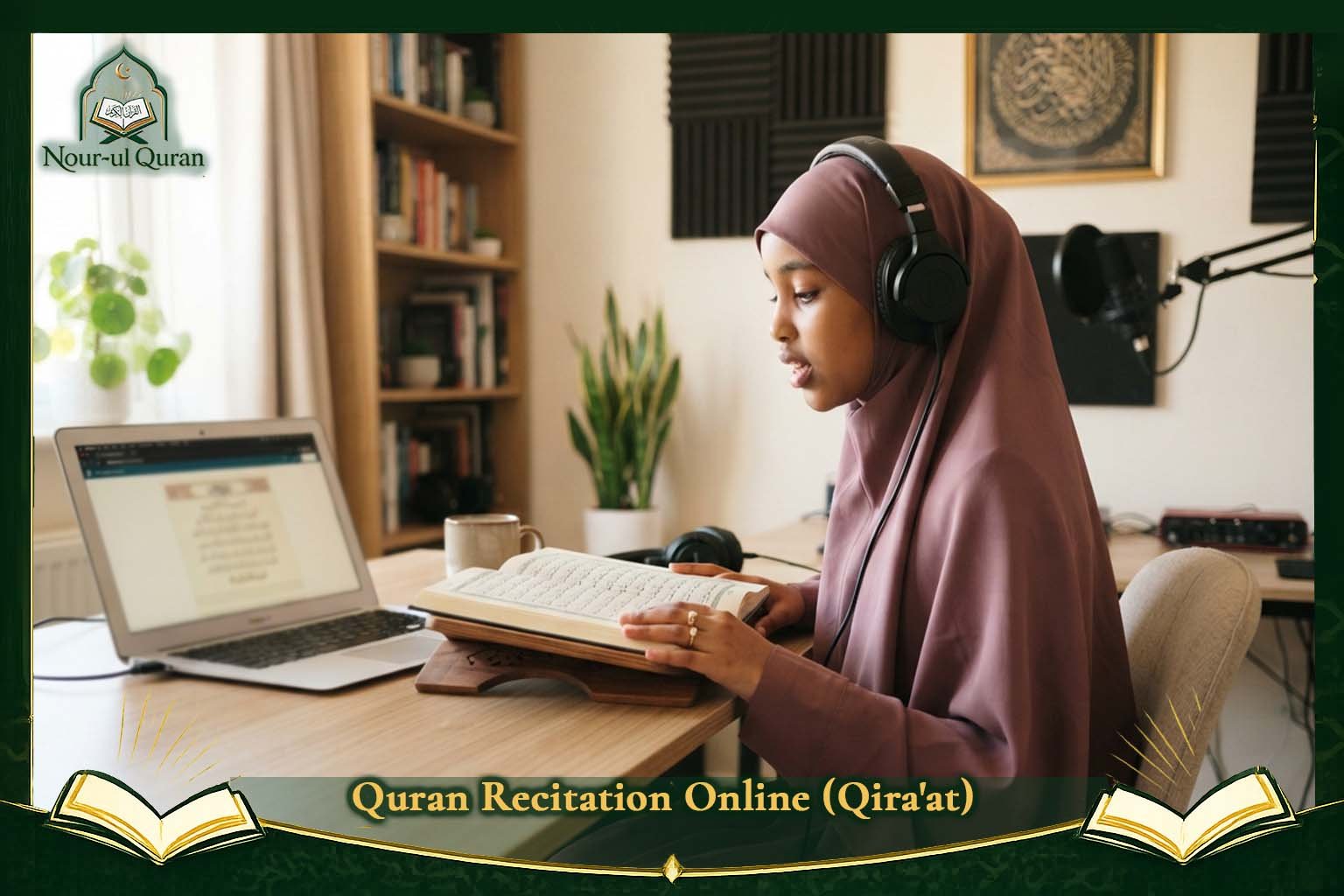
Quran recitation styles online have become far easier to explore than they were even a decade ago. Have you ever heard two reciters read the same verse with a slightly different rhythm? That difference often comes from qira'at, the authenticated recitation traditions of the Quran.
At Nour ul Quran Academy, students regularly ask about this topic once their basic recitation feels solid. This article breaks down what qira'at actually are. It explains why they exist and how a student can begin exploring them today. By the end, this topic will feel far less mysterious than it does right now.
What Are Qira'at, Exactly?
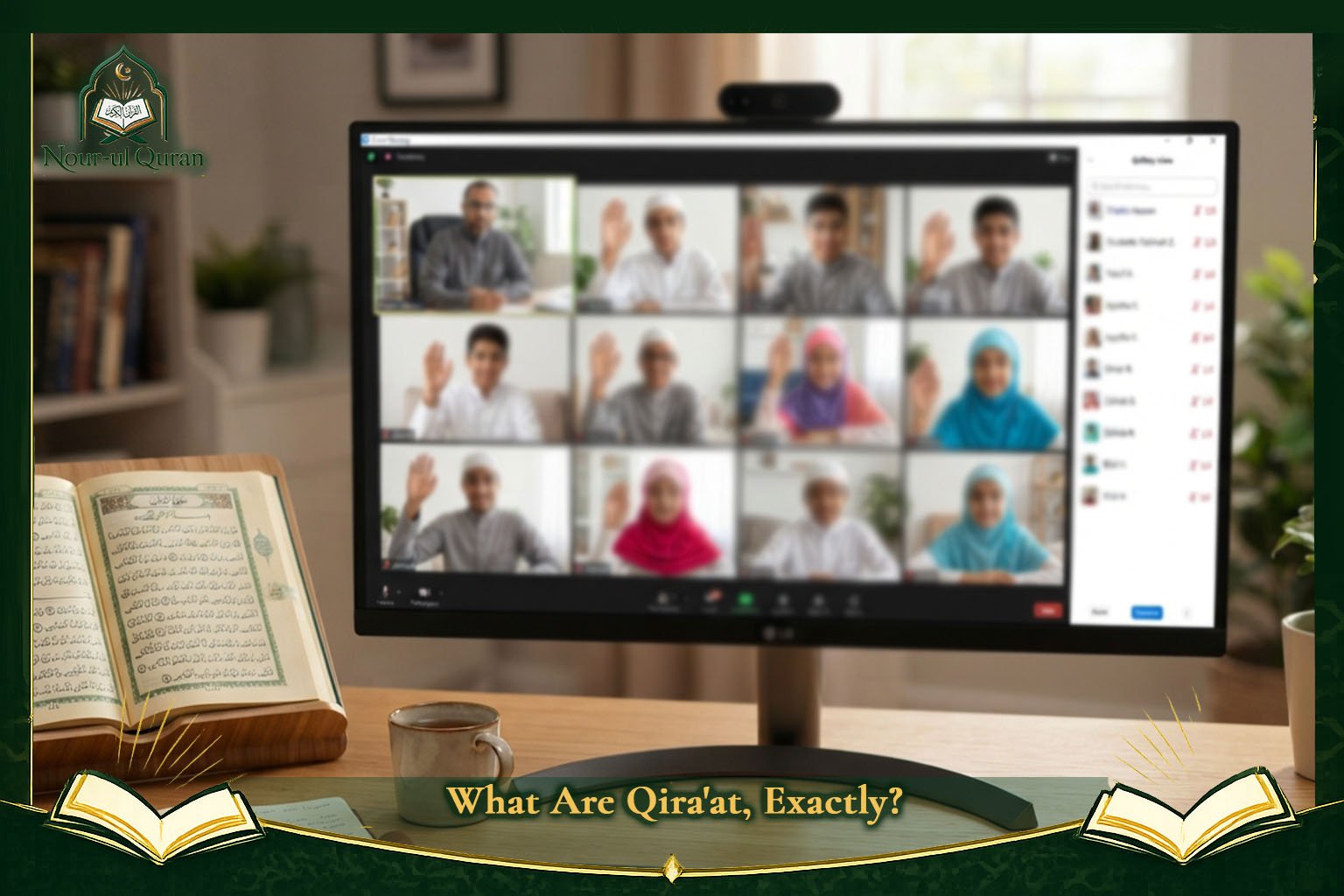
Qira'at refers to different authenticated ways of reciting the Quran. Each one traces back through a verified chain of narrators. That chain leads directly to the Prophet Muhammad, peace be upon him. These are not casual regional variations at all.
They are formally recognized, scholarly verified recitation traditions. Scholars documented and cross-checked each one carefully over centuries. This rigorous process is exactly why they carry such scholarly weight today.
Explore the Beauty of Quran Recitation Styles
The Quran has been transmitted through recognized Qiraat, each offering a rich dimension to the tradition of Quranic recitation. At Nour Ul Quran Academy, students can learn about Quran recitation styles and develop a deeper appreciation of the authentic methods of reciting the Quran under proper guidance.
Start learning today and explore the world of Qiraat with experienced Quran teachers at Nour Ul Quran Academy.

The Most Widely Known Recitation Style
The style heard most often around the world today is called Hafs from Asim. It appears in the vast majority of printed Qurans globally.
Many students study for years without realizing other authenticated styles even exist. This is not a flaw in their education. It simply reflects how dominant this one style has become over time.
Quran Recitation Styles Online That Students Can Explore
Beyond the standard Hafs recitation, ten authenticated qira'at exist in total. Each one is named after a prominent reciter from early Islamic history. Exploring quran recitation styles online has become genuinely possible in recent years.
Specialized tutors, once nearly impossible to find locally, are now just a video call away. This accessibility has opened a field that used to feel reserved for advanced scholars only.
- Ten authenticated qira'at exist, each traced through a verified chain
- Hafs from Asim remains the most widely taught style today
- Differences usually involve subtle vowel length or word form variations
- Online platforms now connect students directly with specialized qira'at tutors
- Most beginners never need to explore beyond standard recitation
How Qira'at Differ From Each Other?
-
Pronunciation and Vowel Length Variations: Some qira'at extend certain vowel sounds slightly longer than others. This changes the rhythm and pacing of that portion of recitation. The underlying word itself, however, remains exactly the same. A trained ear notices this difference clearly during side-by-side comparison.
-
Alternate Grammatical Word Forms: A small number of words appear with a different grammatical ending depending on the qira'ah. This reflects an alternate but equally valid reading. Scholars have documented and explained these variations within their proper historical context for centuries.
Why Study Qira'at Beyond the Standard Style?
Most students never need to move beyond Hafs recitation for daily practice and prayer. However, some choose to explore additional qira'at for deeper scholarly interest.
Others prepare for advanced ijazah certification in a specific qira'ah. A few simply feel curious about the richness of Quranic oral transmission. None of these reasons are more valid than the others.
What a Typical Qira'at Lesson Looks Like
Lessons usually begin with comparative listening exercises. A student hears the same verse recited in two different qira'at side by side. This trains the ear to notice differences before attempting to reproduce them. Once a student identifies differences reliably, guided practice begins. The tutor corrects pronunciation and rhythm just like standard tajweed correction works.
- Comparative listening to build initial recognition of differences
- Guided recitation practice once differences are consistently noticed
- Gradual progression toward independent, confident recitation in the new style
- Optional formal assessment for students pursuing certification in that qira'ah
Do Beginners Need to Worry About Qira'at at All?
Not initially, and this point deserves clear emphasis. Beginners should focus entirely on basic reading first. Tajweed within the standard recitation style comes next in the normal sequence. Introducing multiple qira'at too early tends to create confusion rather than appreciation.
Most academies recommend waiting until recitation fundamentals feel genuinely solid before considering this additional layer.
Common Questions Students Ask Before Committing
Many students worry that studying another qira'ah might confuse their standard recitation. This concern is understandable but usually unfounded with proper guidance. With a qualified tutor, most students find the opposite happens instead.
Studying an additional qira'ah often sharpens attention to subtle detail generally. This heightened attention then improves standard recitation as a side benefit.
Finding a Tutor Qualified in Multiple Qira'at
Look specifically for tutors who list qira'at specialization separately from general tajweed teaching. Do not hesitate to ask directly which specific qira'at they are certified to teach. A tutor's general recitation skill does not automatically mean specialized qira'at training. This distinction matters considerably when choosing where to invest your study time.
The Historical Roots of the Ten Qira'at
The formal recognition of ten qira'at developed over many centuries of careful documentation. Generations of reciters worked to preserve exactly how the Prophet's companions had learned to recite.
Each tradition is named after a reciter especially known for transmitting that specific style. This naming reflects an unbroken chain of teachers stretching back to the earliest era of Islam. Scholars cross-checked each transmission against multiple independent chains before accepting it as authentic.
This verification process is part of why these traditions carry such lasting scholarly weight. Regional popularity shifted over time as well. Certain styles became more dominant in specific areas, depending on which scholars settled and taught there.
This is part of why Hafs from Asim eventually became the standard taught almost everywhere today, while other authenticated styles remain more specialized and less commonly encountered.
Examples That Illustrate How Differences Actually Sound
Abstract descriptions of vowel length can be hard to picture without concrete examples. It helps to understand a few common patterns that appear during comparison. In certain verses, one qira'ah elongates a vowel sound longer than another. This changes the rhythm of that portion without altering the word's spelling or core meaning.
A small number of words also appear with a different final vowel marking. This reflects an alternate but equally valid grammatical reading, carefully documented within its proper linguistic context.
Hearing these examples side by side, rather than only reading about them, makes the concept click far more quickly for most students exploring this topic for the first time.
Long-Term Mastery and Formal Certification
For students pursuing certification in a specific qira'ah, the process culminates in a comprehensive recitation assessment. This resembles a standard ijazah in spirit, but focuses specifically on that qira'ah's unique rules.
Reaching this level typically takes considerable time and dedicated practice beyond standard recitation study. Most students who pursue it already hold strong tajweed fundamentals in the standard style first.
This sequencing matters, since qira'at study builds directly on skills developed during earlier, more foundational stages of learning. Skipping ahead without that foundation tends to slow progress rather than accelerate a student's overall journey toward genuine mastery.
How Nour ul Quran Academy Supports Advanced Recitation Study?
Nour ul Quran Academy connects interested students with tutors specifically trained in multiple qira'at. This specialization goes beyond standard tajweed instruction offered in typical courses. Students pursuing this advanced path receive structured, comparative lessons rather than informal exploration. Our ten qira'at course offers exactly this kind of guided, structured path forward.
Is There an Age Limit for Studying Qira'at?

There is no strict age limit for exploring this specialized field. However, qira'at study builds on solid recitation and tajweed fundamentals already in place. This generally makes it more suitable for older children, teenagers, and adults. Very young children just starting out usually benefit more from mastering standard recitation first.
Whichever path you choose, whether staying with standard recitation for life or eventually branching into specialized study, the underlying goal remains the same. Reciting the Quran with the accuracy and respect its preservation deserves matters far more than which specific qira'ah you eventually choose to explore.
Frequently Asked Questions
The sections above cover what qira'at are, how they differ, and who benefits from studying them. A few additional questions come up often once students consider going further. These answers address points not covered earlier.
Will studying another qira'ah confuse my everyday standard recitation?
This is a common worry, but with a qualified tutor guiding the process, most students find it actually sharpens attention to detail in their standard recitation rather than causing lasting confusion between the two styles.
How many qira'at are formally recognized by scholars today?
Scholars commonly reference ten authenticated qira'at, though the vast majority of Muslims worldwide are only ever exposed to one or two of them during their normal recitation practice.
Is there an age limit for studying qira'at seriously?
There is no strict age limit, but since qira'at study builds on solid recitation and tajweed fundamentals, it generally suits older children, teenagers, and adults rather than very young beginners just starting out.
Can qira'at study lead to a formal certification like an ijazah?
Yes, students pursuing advanced study can earn certification specific to a particular qira'ah, following a rigorous recitation assessment similar in spirit to a standard ijazah but focused on that qira'ah's unique rules.
Do different qira'at ever change the actual meaning of a verse?
Rarely, and never in a way that contradicts core meaning. Differences typically involve pronunciation, rhythm, or minor grammatical variation, all considered equally authentic transmissions rather than conflicting interpretations of the text.
Should I mention interest in qira'at when first enrolling in a course?
Yes, mentioning this interest early helps your academy match you with a tutor qualified for this specific specialization, rather than starting with a general tutor and needing to switch later once the interest becomes clear.
In conclusion, quran recitation styles online open a genuinely rich window into how the Quran has been preserved across many centuries. Qira'at are not casual regional habits, but formally verified scholarly traditions. Most students never need to move beyond standard Hafs recitation, and that is completely fine.
For those genuinely curious or pursuing advanced certification, structured online study now makes this specialized field accessible from anywhere. Nour ul Quran Academy connects students with the right tutors for exactly this kind of advanced, specialized exploration.

Add New Comment