
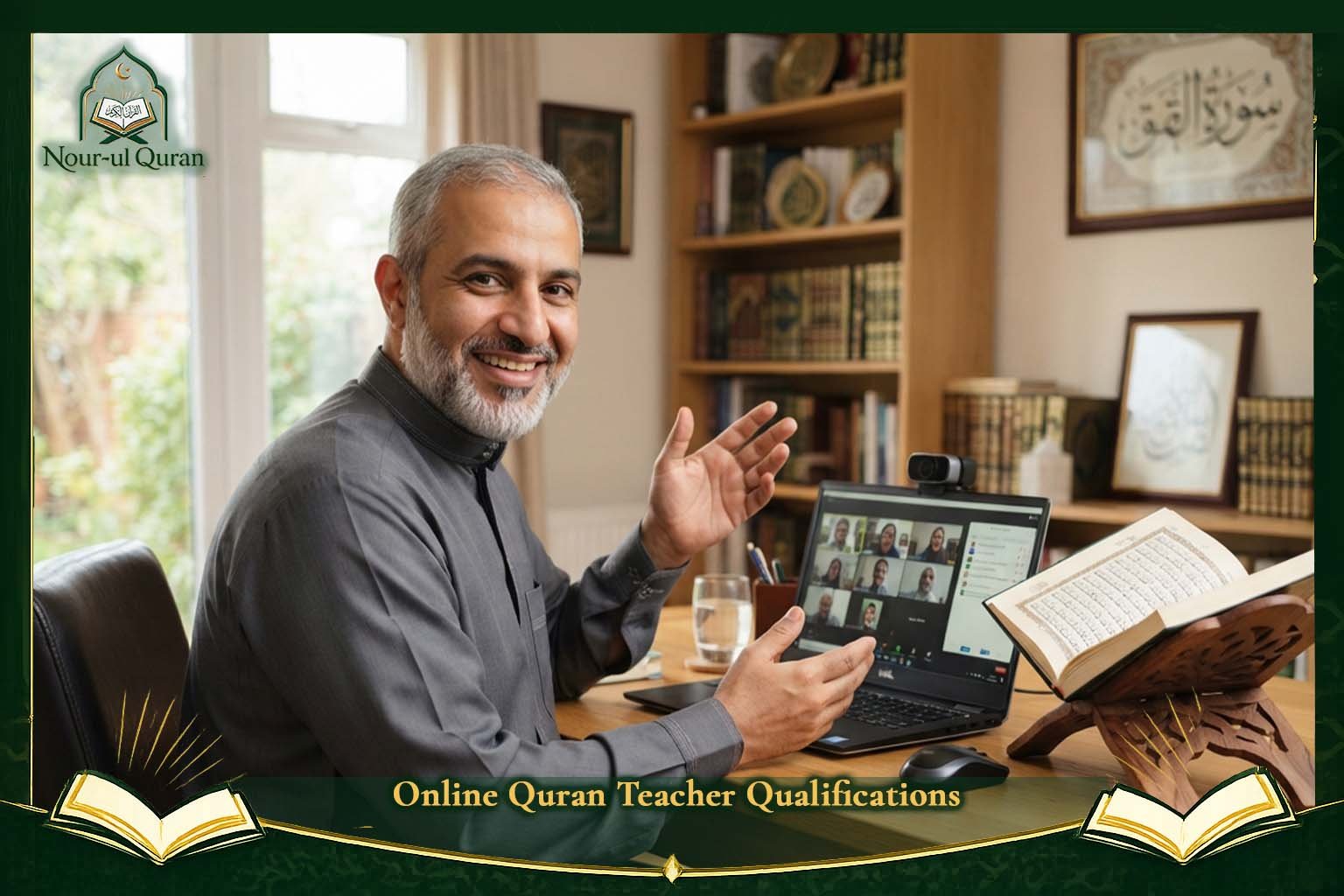
Online quran teacher qualifications matter more than most families realize until something goes wrong. A friendly, confident tutor is not automatically a qualified one. At Nour ul Quran Academy, this distinction shapes how every new tutor is hired and trained
. Parents and adult students deserve a clear way to check credentials before committing months of tuition.
This article breaks down exactly what to look for. It covers formal certification, teaching experience, and practical warning signs.
None of this requires special expertise on your part. A few direct questions can reveal almost everything you need to know.
Why Credentials Alone Do Not Guarantee a Good Fit?

A certificate on a profile page tells only part of the story. It confirms a tutor passed a specific assessment at some point. It says little about how that tutor teaches day to day.
Some highly certified tutors struggle to explain concepts simply. Some less formally trained tutors communicate beautifully with children. This does not mean credentials do not matter.
It means credentials are a starting filter, not a final answer. A responsible family checks both formal qualifications and real teaching behavior before committing long term.
Learn with Qualified Quran Teachers
The right teacher can make a significant difference in your Quran learning experience. At Nour ul Quran Academy, we focus on connecting students with qualified and experienced teachers who can provide effective, personalized online instruction. Choose a learning environment built around proper guidance, consistency, and your individual goals.

Online Quran Teacher Qualifications That Matter Most
Certain credentials carry real weight and deserve close attention. Others sound impressive but matter less than they seem. Knowing the difference saves time during your search. An ijazah stands at the top of this list.
It confirms a verified, scholar-approved recitation. A degree from a recognized institution, such as Al-Azhar, also carries genuine weight. Years of teaching experience matter too, though less than many assume on their own. Below is a clearer breakdown of what each credential actually confirms.
- Ijazah: verified recitation accuracy through a scholarly chain
- Formal Islamic studies degree: broader religious and linguistic training
- Specialized tajweed certification: focused pronunciation and rule expertise
- Teaching experience: practical skill in explaining and pacing lessons
- Child safety training: relevant specifically for tutors working with minors
How to Verify These Qualifications Yourself?
You can verify tutors’ qualifications by checking their certifications, academic backgrounds, teaching experience, and professional profiles before choosing the right instructor.
Asking Direct, Specific Questions
Vague answers are the clearest warning sign during any initial conversation. Ask exactly who granted an ijazah and roughly when. Ask which institution issued a degree, and in what subject.
A genuine tutor answers these questions quickly and specifically. Hesitation or vague deflection deserves a second, more direct follow-up question before moving forward with enrollment.
Requesting a Short Recitation Sample
A brief recorded or live recitation reveals more than any document alone. Listen for smooth, confident pronunciation without obvious hesitation. If something sounds off, ask a more experienced person you trust to listen too.
This simple step adds a layer of confidence beyond paperwork, especially for parents unfamiliar with tajweed themselves.
Why Trial Classes Reveal What Resumes Cannot?
A resume shows what a tutor has done. A trial class shows how they actually teach. Watch closely during this first session.
Notice whether the tutor corrects mistakes gently and immediately. Notice whether explanations include the reasoning behind a rule, not just the correct sound. A tutor who explains why builds understanding that lasts.
A tutor who only repeats correct sounds builds temporary memorization instead. Afterward, ask your child, or reflect yourself, on what was actually learned. Clear recall of even one specific point is a strong positive sign.
Red Flags Worth Taking Seriously
Some warning signs deserve immediate attention rather than a wait-and-see approach. A tutor who cannot name their certifying scholar or institution should raise concern.
Repeated cancellations without clear explanation also matter. So does noticeable inconsistency between sessions, where pacing and quality vary wildly week to week.
None of these signs alone proves a problem exists. Together, though, they form a pattern worth addressing directly with the academy or tutor involved.
- Inability to name a specific certifying scholar or institution
- Frequent last-minute cancellations without reasonable explanation
- Sessions that feel rushed or noticeably inconsistent in quality
- Reluctance to answer direct questions about training or background
- No clear process for correcting mistakes during recitation
How Ongoing Training Keeps Qualifications Current?
Qualifications are not a one-time achievement that simply sits on a profile forever. Teaching skill, in particular, benefits from continuous refinement over the years. Because of this, many strong academies require tutors to complete periodic refresher training.
This training often covers updated teaching methods, classroom technology, and child development research. Consequently, a tutor hired five years ago should still be learning today, not relying entirely on their original certification.
Furthermore, tutors who actively pursue advanced study, such as additional qira'at or tafsir training, often bring fresh energy into standard recitation lessons as well. Therefore, asking a tutor what they have learned recently is a surprisingly useful interview question.
It reveals whether they view teaching as a finished credential or an ongoing craft. Naturally, tutors who see it as ongoing tend to adapt more easily to a specific student's needs over time, rather than repeating the same fixed method regardless of results.
Comparing Independent Tutors to Academy-Verified Tutors
Many families first consider hiring an independent tutor found through social media or word of mouth. This can work well in some cases. However, verification becomes entirely the family's responsibility in that arrangemen
t. There is no institution checking credentials, monitoring session quality, or handling disputes if something goes wrong. By contrast, an academy-verified tutor comes with a built-in accountability structure.
If concerns arise, there is a clear path for raising them and requesting a change. Additionally, academies typically offer backup coverage if a tutor becomes unavailable, whereas an independent arrangement can leave a family without lessons unexpectedly.
Ultimately, both paths can lead to good outcomes, but the verified path requires considerably less ongoing effort from the family itself.
For most parents balancing work and other responsibilities, that reduced burden alone often justifies choosing a properly screened academy tutor over an unverified independent one.
How Nour ul Quran Academy Screens Every Tutor?
Families should not have to independently verify every credential alone. This is exactly why Nour ul Quran Academy builds screening directly into its hiring process. Every tutor's documentation is checked before approval.
Recitation is independently reviewed by senior staff as a second layer of confirmation. A supervised trial teaching session follows, evaluated against the same standards described above.
This process continues after hiring too. Ongoing observation and periodic feedback keep standards consistent over time, not just at the point of initial hiring.
Matching Qualifications to Your Specific Goals
Not every family needs the same type of tutor. A young beginner mainly needs someone patient and encouraging, with solid foundational teaching skill.
An adult preparing for an ijazah of their own needs a tutor holding advanced qualifications in that specific area. Being clear about your actual goal, before searching, narrows the field considerably.
Exploring our homepage or our beginner course page can help clarify which starting point fits your situation best.
What Happens After You Choose a Qualified Tutor?

Choosing a qualified tutor is not the final step in the process. It is really just the beginning of an ongoing relationship
. Regular check-ins during the first few weeks help confirm the fit is working well in practice, not just on paper. Ask specific questions after early sessions, rather than assuming everything is fine by default.
For example, ask what your child found most difficult that week, and whether the tutor addressed it directly. Similarly, adult students should track their own sense of progress honestly, rather than assuming enrollment alone guarantees improvement.
If something feels off after a fair trial period, raising it early is far easier than waiting months to address a growing frustration. Most reputable academies, including Nour ul Quran Academy,
welcome this kind of early feedback, since it helps them place students with the right tutor sooner rather than later.
Frequently Asked Questions
The sections above cover credentials, verification, and warning signs in detail. A few additional questions come up often once families start actively comparing tutors. These answers address practical concerns not covered earlier.
Does a tutor need to be a native Arabic speaker to teach well?
Not necessarily. Many highly qualified tutors learned Arabic formally rather than natively, and strong certification combined with clear teaching ability often matters more than native fluency alone for most students at the recitation and tajweed level.
How much should qualified tutoring typically cost compared to unqualified options?
Pricing varies widely, but verified, certified tutors generally cost somewhat more than unverified independent tutors found through informal channels. This difference usually reflects the additional screening, ongoing training, and accountability structure a proper academy provides behind the scenes.
Can a tutor's qualifications change or expand over time?
Yes, many tutors pursue additional certifications throughout their teaching careers, such as advanced tajweed or qira'at training. A tutor actively continuing their own education often brings renewed enthusiasm and updated teaching techniques into ongoing lessons.
Should I be concerned if a tutor teaches multiple subjects beyond Quran recitation?
Not automatically. Many qualified tutors also teach Islamic studies or Arabic language, which often reflects broader training rather than a lack of focus. The key question remains whether their specific Quran-related qualifications are properly verified.
What should I do if I discover a tutor misrepresented their qualifications?
Raise the concern directly and promptly with the academy managing that tutor. A reputable academy investigates such claims seriously and takes corrective action, which may include reassigning your child or yourself to a different, properly verified tutor.
Are online qualifications treated the same as in-person teaching credentials?
Generally yes, since an ijazah or degree reflects the same scholarly verification regardless of whether teaching happens online or in person. The delivery format does not change the underlying credential, though online-specific teaching skill remains worth assessing separately.
In conclusion, online quran teacher qualifications deserve careful attention before you commit to any long-term enrollment. Formal credentials, verified through direct questions and a genuine trial class, tell you far more than a polished profile alone.
Red flags like vague answers or inconsistent sessions are worth taking seriously rather than dismissing.
Nour ul Quran Academy builds this exact verification process into every hire, so families do not have to investigate everything alone. Taking a little extra time upfront leads to a far smoother, more confident learning experience later.

Add New Comment