
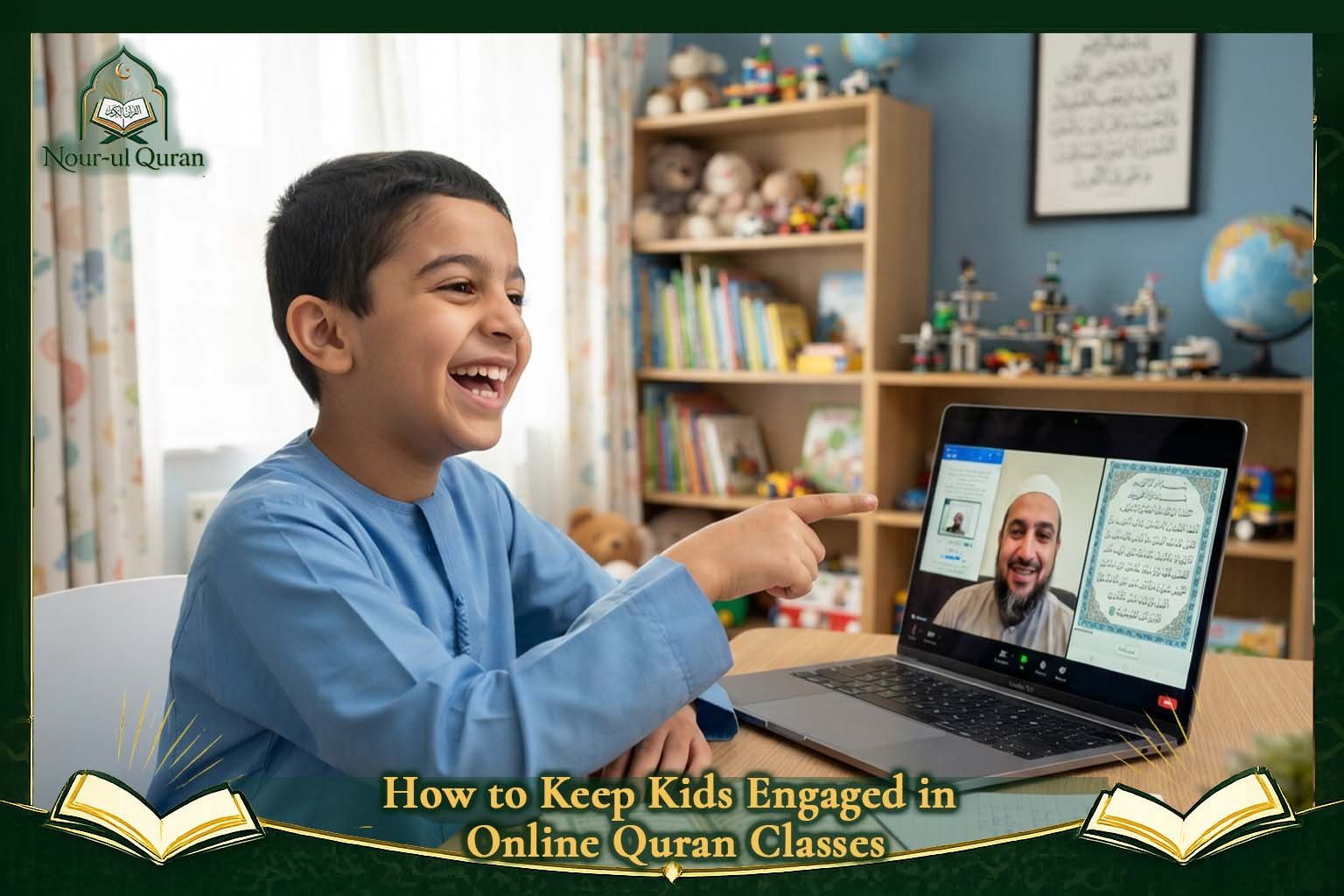
How to keep kids engaged in online quran classes is a question most parents ask sooner or later. A child might sit still for ten minutes, then suddenly lose focus completely. This is normal, not a sign of failure.
At Nour ul Quran Academy, tutors see this pattern in almost every young student. The good news is simple. Engagement is a skill that can be built, not just a trait some children have naturally.
This article shares specific, practical methods that actually work. It covers session structure, tutor techniques, and small habits at home. None of it requires special equipment or a big schedule change.
Why Young Children Lose Focus So Quickly?
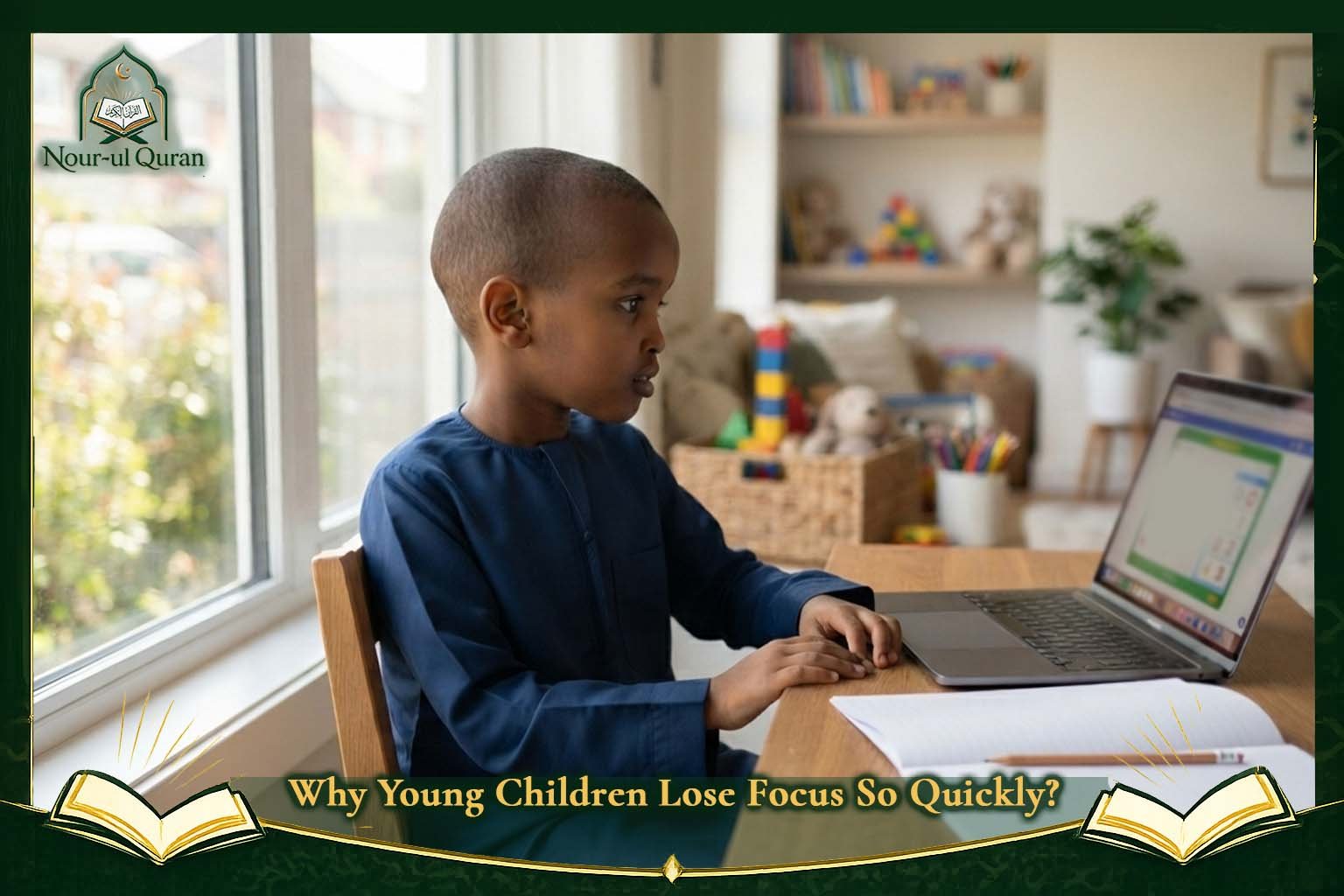
Children have shorter attention spans than adults. This is biological, not a discipline problem. A six-year-old often focuses well for only ten to fifteen minutes at a time. Pushing past that limit rarely helps.
It usually causes frustration instead of progress. Screens also add a unique challenge. A child can look at a screen without truly listening. This makes online classes trickier than in-person ones in some ways. However, the same screen also offers real advantages.
Visual aids, colorful text, and interactive tools can hold attention far better than a plain page. The key is using these tools with intention. Random flashy content actually distracts more than it helps. Structure and purpose matter more than novelty alone.
Make Quran Learning Fun and Engaging for Your Child
Wondering How to Keep Kids Engaged in Online Quran Classes? Nour ul Quran Academy uses interactive teaching methods, age-appropriate lessons, and personalized attention to make Quran learning more enjoyable for children. Give your child a positive online learning experience that encourages them to stay motivated and connected to the Quran.

How to Keep Kids Engaged in Online Quran Classes Through Session Structure?
Session structure matters more than most parents realize. A single fifty-minute block rarely works well for young children.
Breaking it into smaller segments helps enormously. A tutor might spend ten minutes on new material, then switch to review. After that, a short game or quiz can reset attention. Variety keeps the brain alert without losing the lesson's purpose.
Ending on a small win also matters. A child who finishes strong tends to look forward to the next class. Starting with something easy builds early confidence too. These small structural choices add up over many sessions.
- Break each class into three or four short segments
- Alternate between new material and quick review
- End every session with something the child can already do well
- Start with a simple warm-up before harder material
- Include one short interactive moment in every session
Techniques Tutors Use to Hold Attention
Expert tutors use interactive lessons, real-world examples, engaging discussions, and personalized feedback to maintain students’ attention and make complex topics easier to understand.
Turning Repetition Into a Game
Repetition is essential in Quran learning, but plain repetition bores children fast. Skilled tutors turn it into a light challenge instead. A tutor might ask a child to recite a verse three times, each one a little faster or quieter.
Small variations like this keep the brain engaged. The content stays exactly the same, but the format feels new. Children respond well to this kind of gentle challenge, especially when praised for effort rather than perfection.
Using the Child's Own Interests
Every child has interests outside Quran class, and good tutors use them. A child who loves animals might enjoy a story that mentions animals mentioned in the Quran.
A child who loves counting might enjoy tracking verses memorized on a simple chart. This does not change the actual content being taught. It simply wraps that content in something the child already finds appealing, which makes sitting still feel less like a chore.
The Parent's Role in Supporting Engagement
Parents play a bigger role than many realize, even during online sessions. A quiet, distraction-free space matters enormously. A child sitting near a television or busy hallway will struggle no matter how good the tutor is.
Basic comfort matters too. A hungry or overtired child cannot focus well, regardless of the lesson's quality. Beyond the physical setup, parental attitude also shapes engagement.
A parent who shows genuine interest in what their child learned tends to reinforce that engagement naturally. Simply asking what a child learned today, and listening to the answer, sends a strong signal that the class matters.
Matching the Tutor's Personality to the Child
Not every tutor suits every child, and that is completely normal. Some children respond best to a calm, gentle style. Others need more energy and enthusiasm to stay engaged. A mismatch here is rarely anyone's fault.
It simply means the fit is not quite right yet. Nour ul Quran Academy allows families to request a different tutor if engagement stays low after a fair trial period.
This flexibility often solves an engagement problem that no amount of technique could fix on its own. Finding the right match early prevents months of frustration later.
- Notice whether your child responds better to calm or energetic teaching styles
- Give any new tutor at least two or three sessions before judging fit
- Communicate specific concerns directly rather than switching tutors silently
- Ask your child directly how they feel about their current tutor
Managing Screen Fatigue During Longer Programs
Screen fatigue is real, especially for children attending multiple online classes across a week. Signs include rubbing eyes, complaining of headaches, or sudden irritability near the end of a session.
Addressing this does not mean abandoning online classes altogether. Simple adjustments often help significantly. Shorter, more frequent sessions can reduce fatigue compared to fewer, longer ones. Built-in breaks partway through a session also help reset a tired child's attention.
Reducing unrelated screen time on class days can make a noticeable difference too, since total daily screen exposure adds up quickly for many children.
Tracking Progress Without Turning Class Into a Test
Tracking progress helps engagement, but it can backfire if it feels like constant testing. Children generally dislike feeling evaluated at every turn. A better approach focuses on visible, low-pressure markers instead.
A simple sticker chart for completed verses works well for younger children. Older children sometimes prefer a numeric count, such as pages read or verses memorized so far.
What matters most is that tracking feels like celebration, not judgment. A tutor who says look how far you have come sounds very different from one who says you are behind schedule. Both statements can reference the same data.
Only one of them builds motivation. Parents can reinforce this at home by mentioning progress casually rather than turning it into a formal review. A short comment during dinner often works better than a scheduled weekly check-in that feels like an exam.
Handling Engagement Differently for Multiple Age Groups
A single approach rarely works equally well across different ages. Younger children generally need more visual and playful elements to stay engaged throughout a lesson.
Older children, roughly ten and above, often respond better to a sense of ownership over their own learning. Letting an older child choose which surah to review next, within reason, can boost engagement noticeably.
Teenagers sometimes disengage specifically because they feel treated like younger children during lessons. Adjusting tone and expectations for this age group, treating them more like young adults, often resolves this quickly.
Nour ul Quran Academy trains tutors to adjust their style based on age rather than applying one fixed method to every student regardless of maturity level.
How Nour ul Quran Academy Builds Engagement Into Every Class?
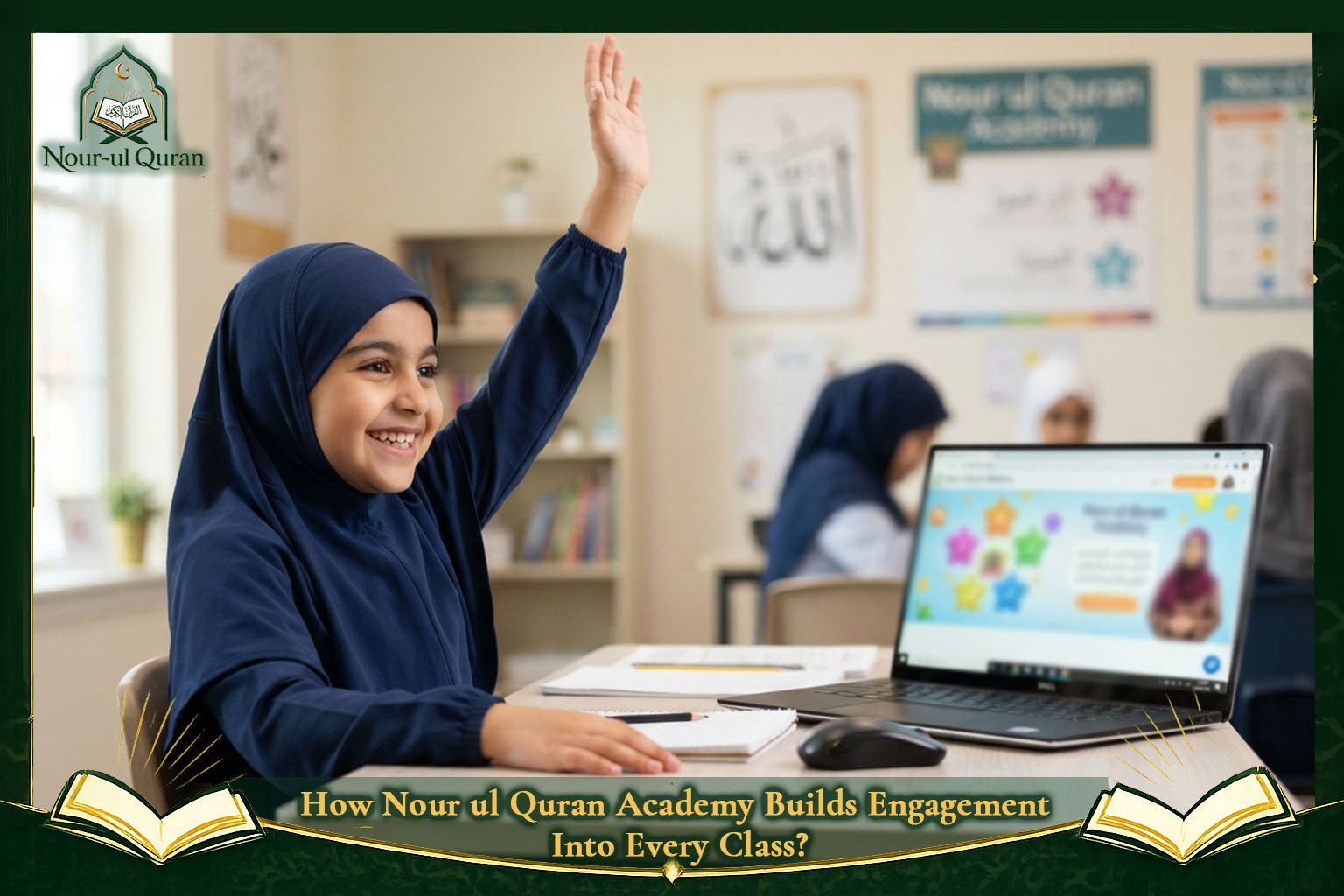
Engagement is not left to chance at Nour ul Quran Academy. Tutors receive specific training on working with young children, not just on Quran content itself. This training covers pacing, tone of voice, and how to read a child's body language through a screen.
Classes are also kept appropriately short for younger age groups, rather than following one fixed length for every student. Parents receive brief feedback after sessions, highlighting what engaged their child most that day.
Over time, this feedback helps families reinforce good habits at home between classes, creating a more consistent experience overall.
Frequently Asked Questions
The guidance above covers structure, tutor technique, and the home environment in detail. A few additional questions come up often from parents managing engagement day to day. These answers fill in practical gaps not addressed earlier.
How long should a first online Quran class be for a young child?
A first session usually works best at twenty to twenty-five minutes rather than a full standard length. This shorter format lets a child adjust to the format without feeling overwhelmed, and length can increase gradually once comfort and focus improve over the following weeks.
What if my child seems engaged in class but forgets everything afterward?
This usually points to engagement without deep processing, often caused by overstimulation rather than genuine boredom. Slowing the pace slightly and adding brief recall questions during the session itself tends to improve retention without reducing how enjoyable the class feels.
Should siblings attend the same online class together?
This depends heavily on age gap and personality. Close-aged siblings sometimes motivate each other, while a wide age gap often causes one child to disengage while material suits the other. Separate sessions are usually safer unless both children are genuinely at a similar level.
Can rewards or incentives help with engagement long term?
Small, occasional rewards can help in the short term, but relying on them too heavily can shift a child's motivation away from the material itself. Praise tied specifically to effort and progress tends to build more lasting engagement than material rewards alone.
Is it normal for engagement to drop after the first few exciting weeks?
Yes, this is extremely common and does not signal a real problem. Initial novelty naturally fades for any new activity, and steady, moderate engagement afterward is a healthier long-term sign than an intense burst of interest that cannot be sustained.
How can I tell if low engagement is really about the online format itself?
Compare your child's behavior across other screen-based activities they otherwise enjoy. If they focus well elsewhere but struggle specifically during Quran class, the format is likely not the core issue, and content pacing or tutor fit deserves closer attention instead.
In conclusion, how to keep kids engaged in online quran classes comes down to structure, personality fit, and a supportive environment at home. Short segments, varied activities, and a tutor who matches a child's temperament all matter far more than any single trick.
Screen fatigue and short attention spans are real challenges, but neither one is permanent or unsolvable. Nour ul Quran Academy builds these engagement principles directly into how classes are taught every day.
With the right structure and a little patience, most children learn to genuinely enjoy their Quran lessons over time.

Add New Comment